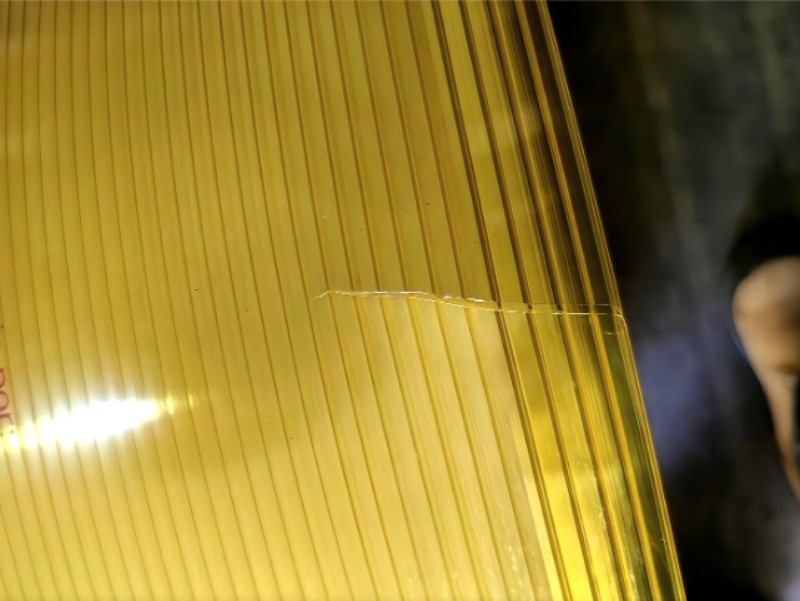
To cut transportation costs, customers choose to roll up PC Hollow Sheets for delivery, yet sheet breakage occasionally occurs. The root causes are analyzed as follows:
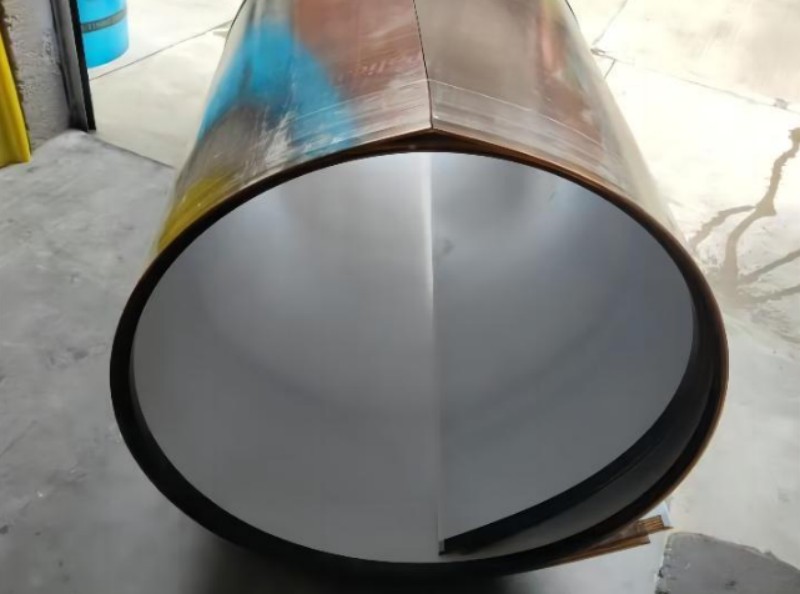
1. Differences in material properties between standard and non-standard PC hollow sheets
Standard PC Hollow Sheets tend to crack easily, while non-standard ones rarely break. Standard PC Hollow Sheets have sufficient grammage and higher hardness compared to non-standard products, which creates greater elastic stress after rolling. In addition, polycarbonate (PC) material is highly sensitive to edge notches. Once the edges of rolled sheets are scratched by sharp gravel, cracks will spread rapidly across the panel.
2. Excessively long storage time after rolling
The diameter of rolled PC Hollow Sheets is far smaller than the allowable bending limit. Normally, the minimum bending radius for double-layer PC Hollow Sheets shall be no less than 175 times the sheet thickness. The time from rolling at the factory to unloading at the destination must not exceed 3 hours. Upon arrival, the sheets shall be unrolled immediately and stored indoors.
3. Edge scratches generated during transit
When moving rolled PC Hollow Sheets into trucks, sliding and dragging will scratch the sheet surfaces. Subsequent jolting during transportation will expand these scratches into full cracks.