
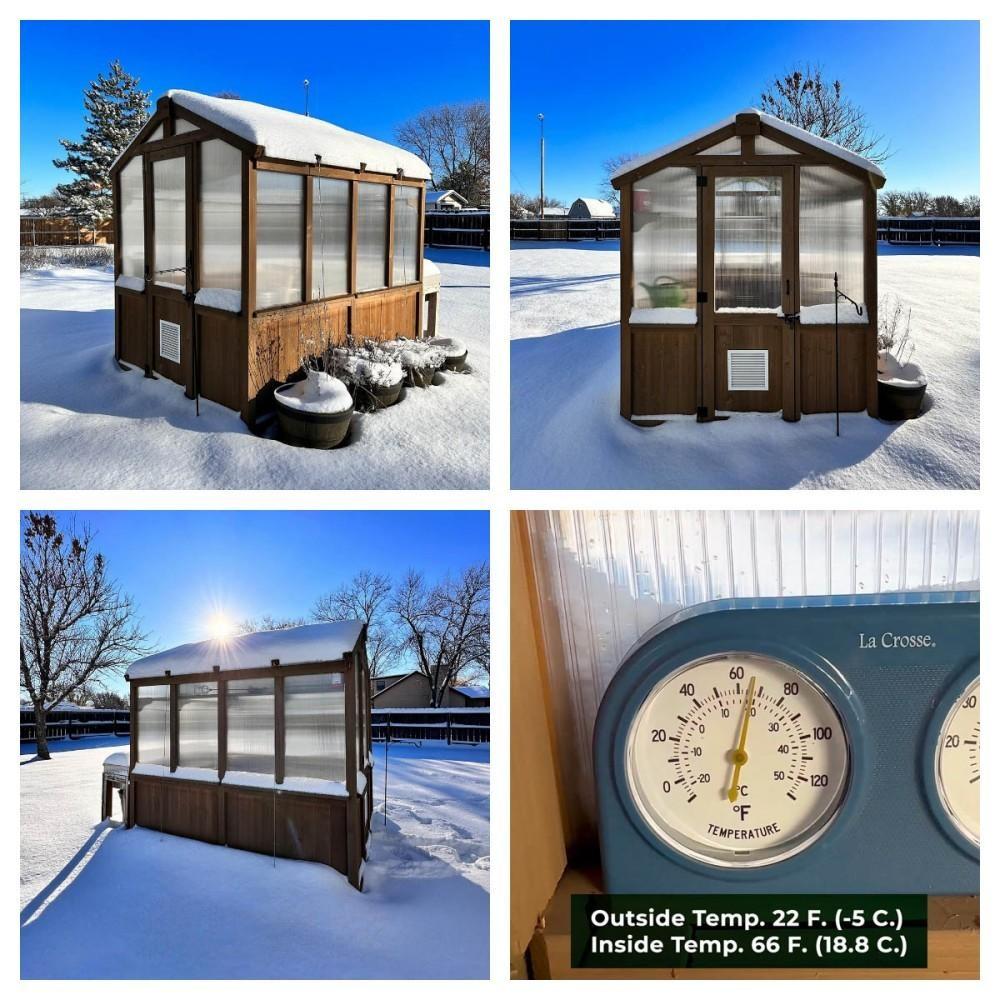
When constructing sunrooms, agricultural greenhouses, daylighting roofs and similar structures, the thermal insulation performance of polycarbonate (PC) hollow sheets is one of the most critical indicators for buyers. Many customers raise common questions:
- Are there national standards regulating the insulation performance of polycarbonate hollow sheets?
- How are insulation grades categorized for sheets with different thicknesses and internal structures?
- Can polycarbonate panels really deliver the advertised effect of 18.8°C indoor temperature when the outdoor temperature drops to -5°C?
In this article, we will thoroughly break down the thermal insulation performance of PC hollow sheets based on current national industry standards, lab test data and real application cases, helping you select the most suitable panel for your project.
1. Official Standards Governing PC Hollow Sheet Insulation Performance
To accurately evaluate the insulation capacity of polycarbonate hollow sheets, we first clarify the complete domestic standard system.
1.1 Standard for PC Hollow Sheets: JG/T 116-2012
- The standard mandates that the test method for thermal transmittance coefficient (K-value) of hollow sheets must comply with GB/T 8484-2008 Grading and Test Method for Thermal Insulation Performance of External Windows and Doors of Buildings.
- It specifies maximum allowable K-value limits for double-wall and triple-wall PC sheets:
- 10 mm double-wall sheet: K-value ≤ 3.0 W/(m²·K)
- 10 mm triple-wall sheet: K-value ≤ 2.8 W/(m²·K)
1.2 Test Standard: GB/T 8484-2008 (Updated to GB/T 8484-2020)
This standard sets the official calibration hot box method for measuring the K-value of PC hollow sheets:
- Simulate indoor and outdoor temperature environments on two sides of the test panel; measure heat transfer under stable temperature difference to calculate the thermal transmittance coefficient (K-value).
- The unit of K-value is W/(m²·K). A smaller K-value means superior thermal insulation performance.
- The standard divides thermal insulation performance into 10 grades. Higher grade numbers correspond to lower K-values and better heat retention.
1.3 General Standard: GB/T 44570-2024
Plastics – Polycarbonate Sheets is a universal standard aligned with ISO specifications, covering solid sheets, hollow panels and PC film products. However, its provisions are broad and contain no special clauses regarding thermal transmittance testing for hollow PC sheets, so it is not used as a core reference for insulation evaluation.
| Test Item | Sheet Specification (Thickness & Structure) | Unit | Maximum Allowed Thermal Transmittance (K-value) |
|---|---|---|---|
| Thermal Transmittance Coefficient | d=4 mm Double-wall Polycarbonate Sheet | W/(m²·K) | ≤3.8 |
| Thermal Transmittance Coefficient | d=6 mm Double-wall Polycarbonate Sheet | W/(m²·K) | ≤3.5 |
| Thermal Transmittance Coefficient | d=8 mm Double-wall Polycarbonate Sheet | W/(m²·K) | ≤3.3 |
| Thermal Transmittance Coefficient | d=10 mm Double-wall Polycarbonate Sheet | W/(m²·K) | ≤3.0 |
| Thermal Transmittance Coefficient | d=10 mm Triple-wall Polycarbonate Sheet | W/(m²·K) | ≤2.8 |
2. How to Read Thermal Insulation Grades of Different Polycarbonate Sheets
Combining industrial test data and structural performance rules, we have sorted out the corresponding K-values and insulation grades for hollow sheets of varying structures, thicknesses and colors for intuitive comparison.
2.1 Core Grading Rules Specified in GB/T 8484-2008
| Insulation Grade | K-value Range (W/(m²·K)) | Applicable Scenarios |
|---|---|---|
| Grade 4 | 3.5 < K ≤ 4.0 | Simple carports, temporary agricultural sheds and other projects with low insulation requirements |
| Grade 5 | 3.0 < K ≤ 3.5 | Standard residential sunrooms, ordinary agricultural greenhouses with regular insulation needs |
| Grade 6 | 2.5 < K ≤ 3.0 | Premium sunrooms, greenhouses in northern regions requiring enhanced heat retention |
| Grade 7 & Above | K ≤ 2.5 | Construction in frigid zones, constant-temperature greenhouses with strict high-standard insulation demands |
2.2 K-value & Insulation Grade Reference Chart for Mainstream Polycarbonate Sheets
| Structure Type | Thickness (mm) | Clear | Bronze | Opal White | Royal Blue | Lake Blue | Grass Green |
|---|---|---|---|---|---|---|---|
| Double-wall | 4 | 3.96 | 3.37 | 3.37 | 3.17 | 3.17 | 3.17 |
| Double-wall | 6 | 3.56 | 3.03 | 3.03 | 2.85 | 2.85 | 2.85 |
| Double-wall | 8 | 3.26 | 2.77 | 2.77 | 2.61 | 2.61 | 2.61 |
| Double-wall | 10 | 3.02 | 2.57 | 2.57 | 2.42 | 2.42 | 2.42 |
| Multi-wall | 12 | 2.78 | 2.36 | 2.36 | 2.22 | 2.22 | 2.22 |
| Multi-wall | 16 | 2.32 | 1.97 | 1.97 | 1.86 | 1.86 | 1.86 |
| Multi-wall | 20 | 1.69 | 1.44 | 1.44 | 1.35 | 1.35 | 1.35 |
| Multi-wall | 25 | 1.51 | 1.28 | 1.28 | 1.21 | 1.21 | 1.21 |
| Multi-wall | 30 | 1.32 | 1.12 | 1.12 | 1.06 | 1.06 | 1.06 |
2.3 Influence of Panel Color on Thermal Insulation Performance
For polycarbonate sheets with identical thickness and internal structure, darker colors deliver lower light transmittance and superior heat shielding capacity:
- Opal white and bronze sheets: K-value is 15% lower than clear sheets, upgrading insulation performance by one grade.
- Royal blue, lake blue and grass green sheets: K-value is 20% lower than clear sheets, lifting insulation performance by 1 to 2 grades.
3. Science Breakdown: Are Thermal Retention and Heat Shielding the Same Concept?
Most buyers confuse thermal retention and heat shielding during product selection. The clear answer is that they are two distinct functions, even though PC hollow sheets can provide both benefits simultaneously. We explain the difference in simple terms below.
3.1 Key Distinction Between Thermal Retention and Heat Shielding
(1) Thermal Retention (Heat Preservation)
- Core function: Trap indoor heat and prevent heat loss
- Typical application scenarios: Winter, nighttime and cold climate areas
- Core goal: Stabilize indoor temperature and avoid heat escaping outdoors
- Evaluation metric: Thermal transmittance K-value (smaller K-value = better heat retention)
(2) Heat Shielding (Solar Heat Blocking)
- Core function: Block external solar radiation heat from entering interior spaces
- Typical application scenarios: Summer, daytime and high-sunlight environments
- Core goal: Prevent overheating and stuffiness inside buildings
- Evaluation metrics: Shading coefficient, infrared blocking rate, light transmittance
3.2 One-Sentence Summary
Thermal retention keeps internal warmth indoors for cold seasons; heat shielding blocks external solar heat to cool interiors in hot summers. Great thermal retention does not guarantee excellent heat shielding, and vice versa. Premium polycarbonate hollow sheets integrate both capabilities.
3.3 Why Polycarbonate Sheets Offer Dual Heat Retention & Heat Shielding
The multi-layer hollow structure of PC panels naturally enables dual thermal performance:
- Hollow cavity structure for thermal retention: Trapped air inside cavities is a poor heat conductor, drastically slowing heat transfer. More wall layers and air chambers reduce K-values and boost heat retention. This explains why 10 mm four-wall sheets can reach Grade 5 or even Grade 6 insulation.
- Pigmented color for heat shielding: Colored panels reduce light transmittance to cut solar radiation heat. Clear sheets offer maximum daylight with moderate heat shielding; opal, bronze and blue variants block far more solar heat for cooler indoor environments. Silver-grey polycarbonate sheets are especially recommended for sunshade carport roofing.
For this reason, PC hollow sheets are rare daylighting materials that maintain warmth in winter and cool interiors in summer.
3.4 Three Common Consumer Misconceptions
- Misconception: Panels with great thermal retention automatically keep interiors cool in summer.
Correction: Thermal retention only traps heat. Poor ventilation will still cause stuffiness in summer; comfortable cooling requires both heat shielding and air circulation. - Misconception: Heat-shielding panels guarantee warm indoor temperatures in winter.
Correction: Heat shielding only blocks sunlight radiation, not indoor heat leakage. Warm winter interiors rely on three factors: high thermal retention, fully sealed enclosures and sufficient sunlight exposure. - Misconception: The -5°C outdoor / 18.8°C indoor temperature gap comes solely from panel insulation.
Correction: This temperature difference is achieved through three combined effects: greenhouse heat accumulation effect, airtight space heat storage and panel thermal insulation. The temperature gap cannot be reached by insulation alone without sunlight.
4. Field Test Interpretation: How to Achieve 18.8°C Indoor Temperature at -5°C Outdoors

Many marketing cases cite a dramatic temperature difference: indoor temperature hits 18.8°C in a sunroom while outdoor temperature drops to -5°C, creating a nearly 24°C temperature gap. This effect is achievable, yet two indispensable preconditions must be met.
4.1 Core Working Mechanism: Greenhouse Effect + Airtight Heat Storage
Polycarbonate sheets do not generate heat actively; indoor temperature rises via three combined physical mechanisms:
- Greenhouse effect: Short-wave solar radiation penetrates PC panels and warms interior air and ground surfaces. Long-wave thermal radiation generated indoors is trapped by the sheets and cannot escape outward, accumulating heat continuously.
- Panel thermal retention: Low K-value hollow sheets drastically slow outward heat conduction, locking accumulated warmth inside the space.
- Fully sealed enclosure: Airtight construction eliminates cold and hot air convection through gaps, the fundamental prerequisite for heat accumulation.
4.2 Two Critical Reminders
- No sunlight = no dramatic temperature gap. On cloudy days or at night without solar radiation input, indoor temperatures will gradually drop to match outdoor levels.
- Complete airtightness is mandatory. Air leakage gaps eliminate most insulation performance, making the large temperature difference impossible to realize.
4.3 Influence of Panel Structure on Thermal Performance
Under identical sunlight and airtight conditions:
- 10 mm four-wall multi-layer sheets deliver far superior thermal retention compared to 4 mm double-wall panels, supporting higher stable indoor temperatures and slower heat loss after sunset.
- Additional hollow air chambers in multi-wall designs create thicker air insulation layers, cutting K-values by 15%–20% vs. equal-thickness double-wall sheets for obvious insulation advantages.
5. Polycarbonate Sheet Selection Guide by Thermal Insulation Demand
Below is targeted product advice based on insulation grades and practical usage scenarios:
- Simple carports & temporary agricultural sheds: 4–6 mm double-wall clear sheets (Grade 4 insulation, cost-effective basic performance).
- Standard residential sunrooms & southern greenhouses: 8–10 mm double-wall sheets (Grade 5 insulation, balanced daylight and heat retention).
- Northern residential sunrooms & high-standard agricultural greenhouses: 10 mm+ four-wall multi-layer sheets (Grade 5–6 insulation; dark-colored variants further enhance heat retention).
- Frigid zone construction & constant-temperature greenhouses: 16 mm+ multi-wall sheets (Grade 7+ premium insulation, paired with professional sealing systems for stable year-round temperature control).
6. Frequently Asked Questions
Q1: What insulation grade does a 10 mm four-wall polycarbonate sheet reach?
A: Under GB/T 8484-2008 standards, the K-value of a 10 mm clear four-wall multi-layer sheet ranges from 2.8 to 3.0 W/(m²·K), rated conservatively as Grade 5 and capable of reaching Grade 6 in practical testing. Its thermal retention outperforms equal-thickness double-wall sheets significantly.
Q2: Where do the K-value test figures in this article originate?
A: All data is built on mass industrial laboratory testing results, with supplementary calculations based on thickness incremental rules and color-related heat shielding performance changes.
Q3: Does polycarbonate sheet thermal insulation degrade over time?
A: High-quality PC hollow sheets manufactured from virgin raw materials with adequate thickness, standard weight and UV-resistant coating experience minimal insulation performance decline after long-term service. Low-cost panels made from recycled plastic will turn yellow and brittle rapidly, causing severe loss of thermal insulation capacity. We recommend purchasing virgin-material sheets compliant with national industry standards.
Article Adaptation Notes for Overseas Website Release
- SEO Optimization: The title and body adopt industry mainstream English keywords: polycarbonate hollow sheets, thermal transmittance K-value, sunroom greenhouse insulation, heat shielding, multi-wall polycarbonate panel
- Format Compatibility: All tables use standard HTML table syntax, directly compatible with WordPress, Shopify, Wix and other independent station backends
- Term Standardization: Construction thermal insulation professional terminology conforms to North American & European building material industry unified expressions
- Readability Adjustment: Chinese national standard codes are retained for technical reference, with plain-language interpretation added for foreign buyers unfamiliar with Chinese building codes
- Commercial Tone: Neutral technical popular science style, suitable for official brand blog, product knowledge base and customer guide page publishing

![[Calculator] PC Hollow Sheet Weight & Volume](https://polyroofs.com/wp-content/uploads/2026/06/Polycarbonate-Hollow-Sheet2.jpg)

