When sourcing PC Hollow Sheets, purchasers frequently face a confusing issue: products that appear identical visually can carry vastly different price tags, ranging from merely dozens to well over one hundred US dollars per square meter. Such dramatic price gaps are primarily driven by discrepancies in product specifications and structures. This article systematically unpacks the root causes of pricing differences across three critical dimensions—thickness, areal weight, and functional add-ons. It also provides scenario-based specification recommendations to help buyers steer clear of two costly pitfalls: overinvesting in overly thick sheets and paying premiums for unnecessary functional features.
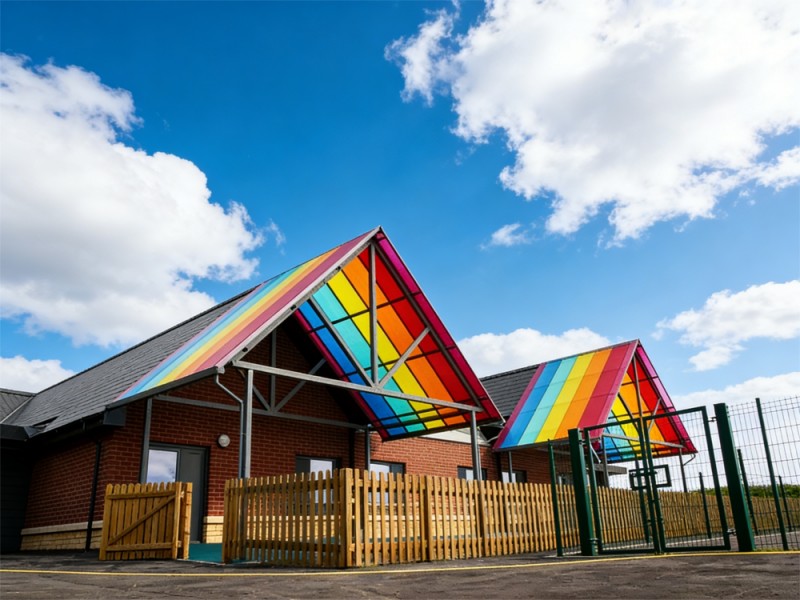
1. Thickness: The Primary Driver of Price Differentials
Sheet thickness directly dictates polycarbonate raw material consumption, making it the most fundamental factor shaping production costs and market pricing. For mainstream double-layer PC Hollow Sheets available on the market, each incremental 2 mm of thickness pushes unit prices up by an average of 30% to 50%.
| Double-Layer PC Hollow Sheet Thickness | Standard National Unit Price (USD/㎡) | Price Variation Overview | Key Underlying Reason |
|---|---|---|---|
| 4 mm | 2.2 | Entry-level budget option for lightweight applications | Minimal raw material usage (~0.8 kg per square meter) paired with streamlined manufacturing workflows |
| 6 mm | 3.3 | Roughly 50% more expensive than 4 mm sheets; the most cost-effective all-purpose grade | 50% higher raw material input delivers vastly improved structural stability, suitable for most general construction and shading projects |
| 8 mm | 3.8 | Around 16.67% pricier than 6 mm variants; optimized for thermal insulation applications | Additional polycarbonate feedstock, paired with refined internal hollow rib designs for enhanced heat retention |
| 10 mm | 4.4 | Double the cost of 4 mm sheets, engineered exclusively for heavy-load construction | Twice the raw material volume of 4 mm sheets (~1.6 kg per square meter), delivering superior snow and wind load resistance |
| 12 mm & above (multi-layer hollow) | 5.5 | 12 mm sheets cost 25% more than 10 mm grades; 25 mm sheets reach 4.4× the price of standard 4 mm stock | Intricate multi-cavity internal structures demand far more raw materials, complex tooling, and extended production lead times |
It is critical to note that greater thickness does not always equate to better value. For example, 4 mm PC Hollow Sheets fully satisfy the load-bearing demands (≤10 kg/㎡) of domestic residential carports and bicycle shelters.
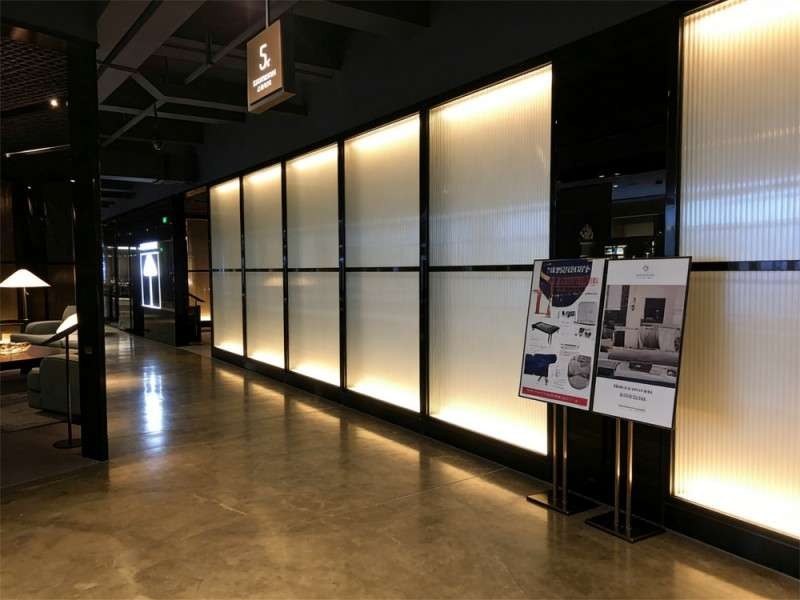
2. Areal Weight: Hidden Cost Gaps Created by Layer Count and Internal Geometry
For sheets of identical nominal thickness, internal structural designs (double-layer, four-layer, honeycomb core) dictate weight per square meter, which creates unobvious but significant pricing gaps. More internal layers translate to complex tooling, elevated raw material demand, and lower production yields—all of which are reflected in final pricing proportional to weight increases.
| Structural Format | Areal Weight for 8 mm Sheets (kg/㎡) | Weight Uplift vs. Double-Layer Sheets | Unit Price (USD/㎡) | Source of Price Premium |
|---|---|---|---|---|
| Double-layer hollow | 1.4–1.5 | Baseline reference value | 3.8 | Simplified construction with two outer face panels and minimal support ribs, cutting material and labor overhead |
| Four-layer hollow | 1.6–1.7 | +0.2 kg per square meter | 4.3 | Two extra intermediate panels and denser reinforcing ribs boost raw material consumption by 14.3% |
| Honeycomb core | 1.9–2.0 | +0.3 kg per square meter | 5.2 | Precision extrusion required for interlocking honeycomb geometry; raw material usage rises by 36.7%, and custom moulding pushes defect rates 10% higher |
Real-world procurement illustrates this disparity clearly: an 8 mm double-layer PC Hollow Sheet costs 3.8 USD per square meter, while an 8 mm honeycomb-core equivalent runs 5.2 USD per square meter—a 1.4 USD/㎡ surcharge. Though honeycomb sheets only weigh 0.5 kg more per square meter than double-layer alternatives, specialized mould requirements and higher reject rates during production inflate manufacturing expenses, which suppliers pass on to buyers.
3. Functional Coatings & Treatments: Premium Charges for Specialized Performance
Standard PC Hollow Sheets only deliver basic light transmission and impact resistance. Custom functional modifications—including anti-fog coatings, matte embossing, dual-color co-extrusion, and reinforced UV protection—require extra surface treatments or modified extrusion setups. These upgrades add 0.28–0.7 USD/㎡ for single features, or 1.4–2.1 USD/㎡ for bundled multi-function packages. A full breakdown is outlined below:
| Optional Functional Upgrade | Production Process Details | Price Premium (USD/㎡) | Ideal Application Scenarios | Cost Breakdown for Added Value |
|---|---|---|---|---|
| Anti-fog treatment | Co-extruded hydrophilic surface coating (utilizing Lanxess ANTIFOG technology) | 0.4–0.7 | Commercial greenhouses, underground parking entryways, other high-humidity environments | Extra expenditure on specialized anti-fog coating compounds; tight manufacturing tolerances needed to ensure consistent coating thickness |
| Matte finish | Surface embossing to reduce glare, with light transmittance restricted to 60%–80% | 0.28–0.42 | Indoor partition walls, illuminated advertising signage | Additional embossing mould costs; production throughput drops by 15% due to slower forming cycles |
| Dual-color co-extrusion | Dual-stream extrusion to produce contrasting hues on the sheet’s two faces (e.g., clear top surface, blue base) | 0.55–0.83 | Architectural facades, decorative landscape canopies where visual appeal is prioritized | Dual-feed extrusion hardware creates technical complexity during material switches, raising defective output by 8% |
| Heavy-duty anti-aging UV coating | Double-sided thickened UV barrier coating (≥60 μm, versus the standard 50 μm coating thickness) | 0.7–1.1 | Highland and coastal regions exposed to intense ultraviolet radiation and salt-laden sea spray | Increased UV coating raw material volume, plus extended curing time to fully set protective surface layers |
Buyers should remain vigilant against unnecessary functional upcharges. For instance, anti-fog coatings deliver zero practical benefit for residential balcony canopies operating under low-humidity conditions. Vendors pushing anti-fog variants for such projects will add an entirely avoidable 0.7 USD cost per square meter. Conversely, opting for uncoated standard sheets in commercial greenhouses carries long-term risks: fog buildup cuts light transmittance by 30% within just 3–5 months, severely suppressing crop yields. In this case, the anti-fog upgrade represents a necessary, cost-effective investment.
4. Scenario-to-Specification Matching: Optimize Cost Efficiency by Selecting Appropriate Grades
The table below aligns recommended PC Hollow Sheet specifications with common use cases, eliminating two costly mistakes: over-specifying high-performance sheets for low-demand applications, and purchasing thin, under-engineered sheets for heavy-duty projects. This matching framework maximizes overall value for money.
| Application Scenario | Recommended PC Hollow Sheet Grade | Base Unit Price (USD/㎡) | Unsuitable Specifications & Corresponding Drawbacks |
|---|---|---|---|
| Private residential carports, bicycle storage shelters | 4 mm double-layer standard sheet | 2.2 | 10 mm double-layer sheets: double the upfront material cost, with greater areal weight increasing structural framing expenses |
| General outdoor rain awnings, indoor decorative screens | 6 mm double-layer standard sheet | 3.3 | 8 mm honeycomb sheets: redundant over-performance that adds an unnecessary 1.9 USD cost per square meter |
| Commercial greenhouses for leafy greens and flowering crops | 8 mm double-layer anti-fog sheet | 3.8 | 4 mm standard sheets: persistent internal fogging diminishes sunlight penetration and stunts plant growth |
| Building daylight corridors, residential roof overhangs | 10 mm double-layer standard sheet | 4.4 | 6 mm double-layer sheets: inadequate snow load capacity (rated for only 30 kg/㎡), prone to permanent deformation in northern snow-heavy climates |
| Insulated cold-climate greenhouses and seedling propagation sheds | 12 mm three-layer standard sheet | 5.5 | 8 mm double-layer sheets: poor thermal insulation (thermal conductivity of 0.20 W/(m·K)), driving up seasonal heating expenditures |
| Large-scale venue daylighting (e.g., indoor sports stadiums) | 16–25 mm multi-layer wind-resistant sheet | 6.9–9.7 | 10 mm double-layer sheets: limited spanning capacity (max purlin spacing of 1.5 m), requiring denser support framing and raising total construction outlay |
5. Buyer’s Practical Checklist: Three Steps to Verify Fair Pricing
- Calculate baseline raw material expenses: Virgin PC resin trades at roughly 2.1 USD per kilogram. A 4 mm double-layer PC Hollow Sheet consumes 0.8 kg of resin per square meter, equating to a base raw material cost of 1.7 USD/㎡. When factoring manufacturing labour, logistics, and reasonable profit margins, a fair market price lands at 2.2 USD/㎡. Quotes falling below this benchmark often signal the use of low-grade recycled polycarbonate feedstock.
- Audit the necessity of functional upgrades: Clearly communicate your exact project application to suppliers. For residential balcony shading structures, decline bundled anti-fog and reinforced UV coating add-ons—standard factory UV coating already delivers sufficient weather protection for low-humidity domestic environments.
- Cross-reference nominal thickness against certified areal weight: When ordering material labelled “8 mm double-layer PC Hollow Sheet,” request weight verification documentation. Qualified compliant stock must weigh between 1.4 and 1.5 kg/㎡. Products registering only 1.2 kg/㎡ are almost certainly falsely sized (actual thickness ~7 mm); while cheaper upfront, they offer drastically reduced structural durability and service life.
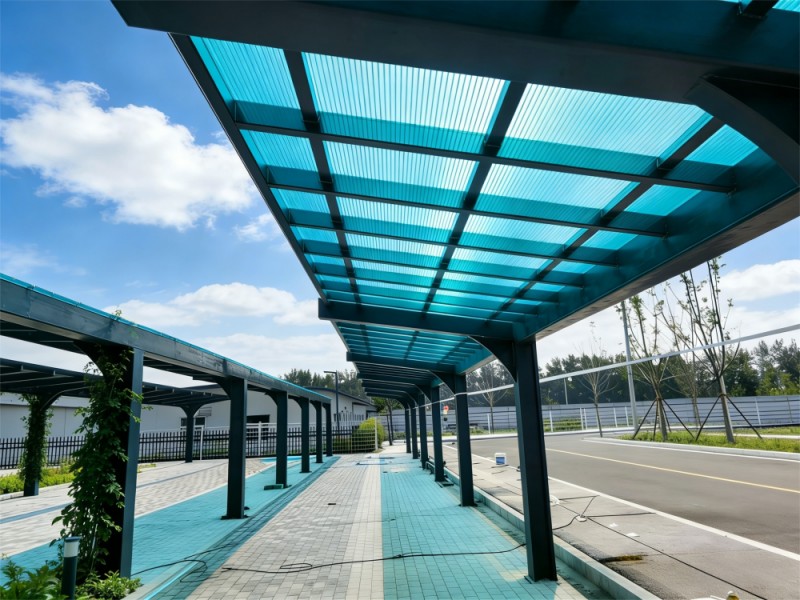
Closing Remarks: Pricing Disparities Stem from Alignment Between Specifications and Project Requirements
Variations in PC Hollow Sheet pricing ultimately boil down to how well a sheet’s technical specifications match a buyer’s unique project demands. Budget-friendly 4 mm sheets are not inherently inferior products, just as premium-priced 10 mm sheets are never an unwarranted luxury for suitable heavy-duty builds. Prior to placing orders, purchasers should clarify three core project parameters: primary use case (residential shading vs. commercial agriculture), operating environment (snow-prone northern zones vs. rainy southern coastlines), and required functional treatments (anti-fog performance or standard UV weatherproofing). Selecting matching sheet grades accordingly ensures efficient capital allocation, avoiding premature replacement costs from chasing unrealistically low prices, or wasted expenditure from over-engineering sheets for low-stakes applications.