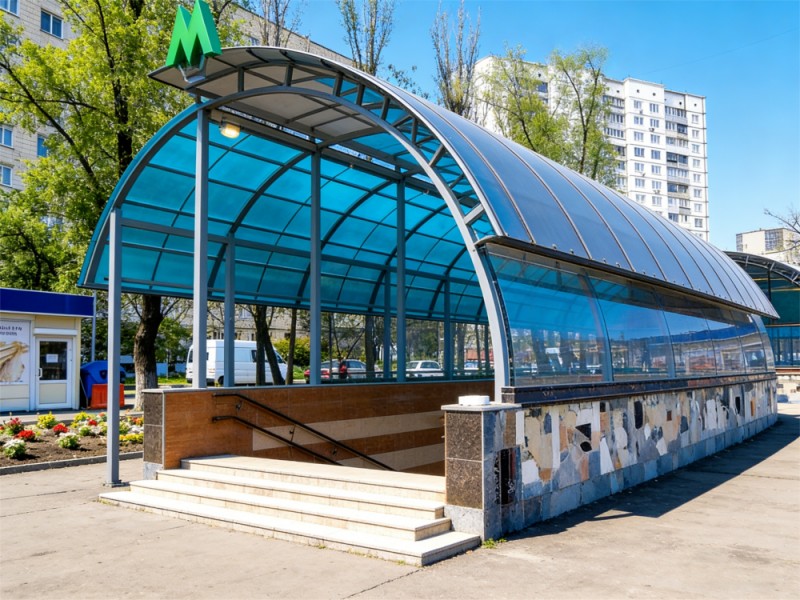
Bus Stop Polycarbonate Hollow Sheet Canopy — Skylights of the City
Waiting Shelter: Selection Guide for Polycarbonate Hollow Sheet
In urban public transit systems, waiting shelters covered with Polycarbonate Hollow Sheet have become the mainstream option due to their low cost, easy maintenance and well-matched functional performance. Taking Polycarbonate Hollow Sheet as the main covering material and equipped with basic functional components, they can fully satisfy passengers’ waiting demands while cutting capital investment in urban public transit facilities. This article analyzes supporting configurations, core advantages and Polycarbonate Hollow Sheet selection standards to offer references for urban public transit facility planning.
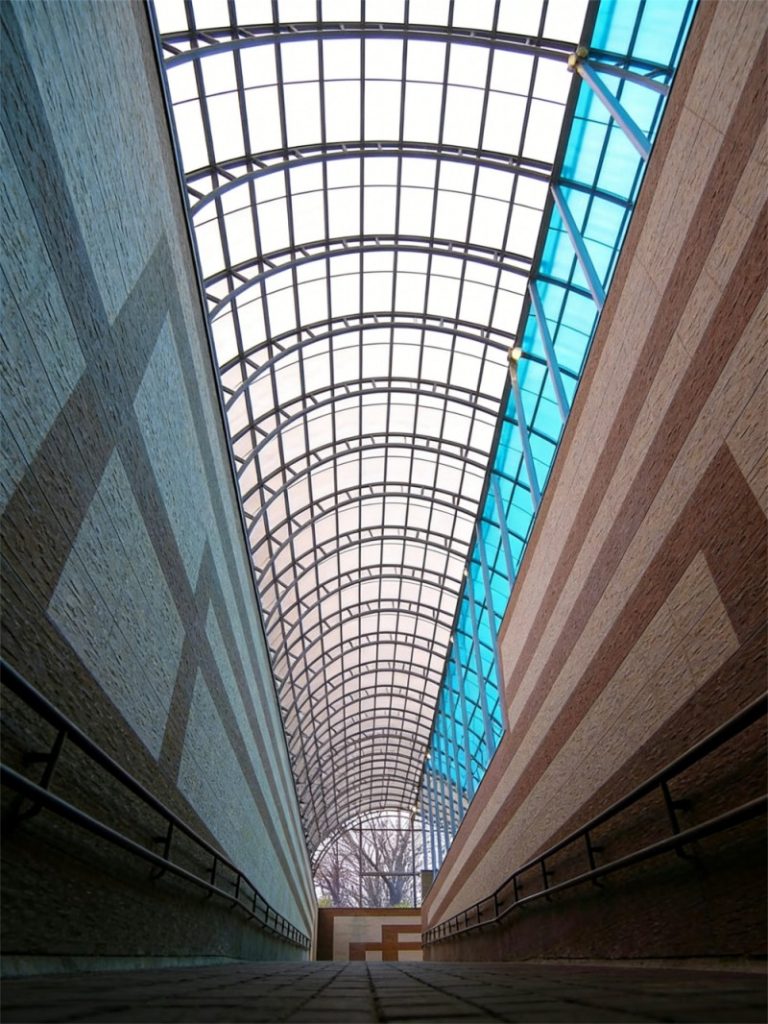
I. Supporting Facilities of Polycarbonate Hollow Sheet Waiting Shelter: Centered on Basic Functions & Space Utilization
The configuration of Polycarbonate Hollow Sheet waiting shelters is designed around three core demands: weather shielding, passenger convenience and operational management. Instead of complex extra functions, it focuses on practicality and cost balance, divided into four modules as follows:
1.1 Weather Shielding Module: Polycarbonate Hollow Sheet + Aluminum Alloy Frame for Basic Protection
Weather shielding serves as the core function of waiting shelters. The combination of Polycarbonate Hollow Sheet roof, steel frame and rear enclosure achieves integrated sunshade, rainproof performance and structural stability:
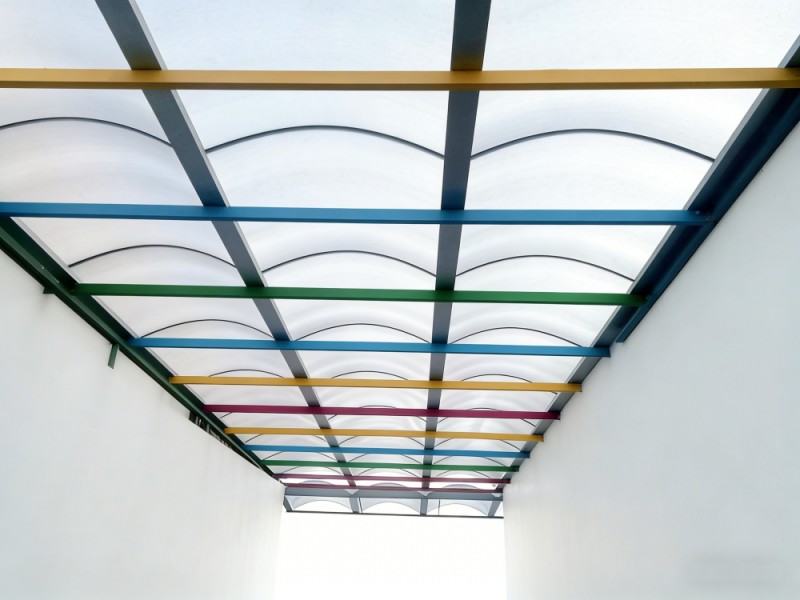
- Top Polycarbonate Hollow Sheet: 6mm or 8mm silver-grey double-layer Polycarbonate Hollow Sheet (weight 1.2–1.4 kg per square meter), compatible with the load-bearing capacity of aluminum alloy frames;
- Steel Frame: Main profiles adopt 30×50mm specifications with a thickness of 1.2–1.5mm and anti-rust treatment, meeting low-maintenance demands for small and medium-sized cities. The frame spacing is controlled at 0.8–1 meter to secure the Polycarbonate Hollow Sheet and prevent deformation;
- Rear Enclosure Structure: Aluminum alloy gussets combined with advertising display boards serve as auxiliary supports for the Polycarbonate Hollow Sheet and form a semi-enclosed shelter. It blocks side wind and rain (especially suitable for windy road sections), and its surface can carry public service ads or bus route maps to maximize space utilization.
1.2 Passenger Convenience Module: Streamlined Practical Facilities Focused on Core Demands
This module retains only essential passenger facilities to avoid extra costs from redundant equipment, including two categories:
- Classified Waste Bins: Fixed on the shelter side near the entrance, adopting dual-bin design for recyclable and non-recyclable waste with a capacity of 15–20 liters. The bins are welded to the aluminum frame to prevent tipping. Some cities attach mini bus information stickers (e.g., last bus schedule) on bin surfaces for multi-purpose use;
- Bus Information Display: No independent electronic devices; two low-cost display methods are adopted: 1) Paper route maps pasted on rear advertising boards; 2) Metal information plates hung on aluminum columns marking route names, stops and first/last bus times. These plates feature outstanding weather resistance and can remain functional for 5 years without replacement.
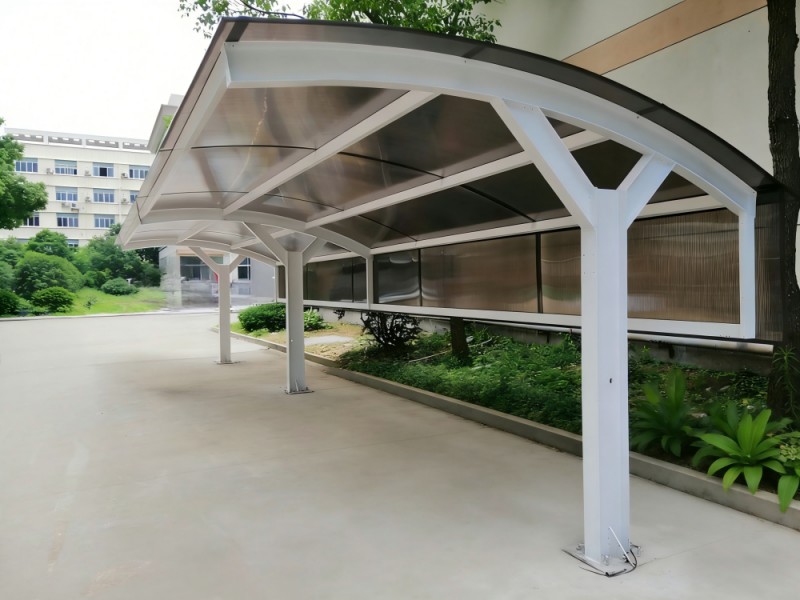
1.3 Operation Module: Advertising Boards to Support Shelter Self-sustainability
To reduce long-term maintenance costs, simple Polycarbonate Hollow Sheet waiting shelters are generally fitted with advertising boards. Revenue from commercial and public service ads offsets facility maintenance expenses:
- Advertising Board Positions: Mainly arranged on the shelter rear (separated from bus information zones) and side columns. Rear boards measure approximately 1.2m×0.8m, matching standard poster sizes; small column ads are about 0.6m×0.3m for mini light boxes or inkjet prints;
- Advertising Forms: Static inkjet prints are the primary choice to eliminate maintenance costs of electrical equipment. Busy road sections may add low-power LED strips (5–10W) for night-time advertisement display with high cost performance.
1.4 Auxiliary Module: Low-cost Upgrades for Special Scenarios
Simple auxiliary fittings can be added according to road conditions:
- Seats: For high-traffic areas (near schools, hospitals), 1 to 2 anti-slip aluminum alloy seats (1.2–1.5m long, 3–5kg each) are installed inside shelters for short rest;
- Lighting: LED energy-saving lamps (8–12W, 220V) are mounted at the center of top frames for sections lacking streetlights. The lamps cover a waiting area with a 3–5 meter radius and operate 6–8 hours nightly.
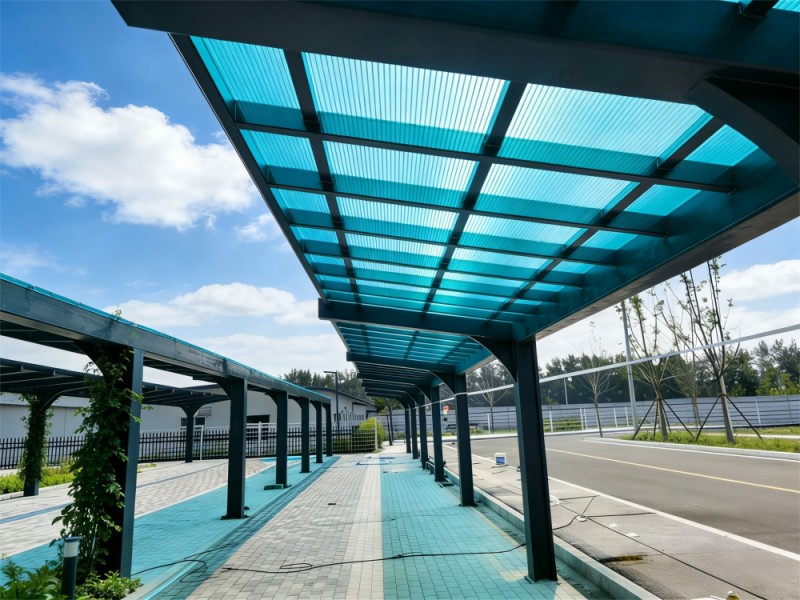
II. Polycarbonate Hollow Sheet Selection for Waiting Shelters: Focus on Compatibility & Cost Efficiency
As the core covering material, proper Polycarbonate Hollow Sheet selection directly determines weather resistance and service life. Specs should be matched with local road environments and budget to avoid overinvestment or insufficient performance.
2.1 Thickness Selection: Matched with Road Conditions, 6mm as Standard
Sheet thickness determines wind resistance, rain tightness and thermal insulation. Small and medium-sized cities may select specs based on road types:
| Road Type | Recommended Thickness | Core Advantages | Applicable Scenarios |
|---|---|---|---|
| Ordinary roads (low wind, moderate rainfall) | 6mm double-layer Polycarbonate Hollow Sheet | Low cost, lightweight, compatible with most road sections | Residential and commercial zones with moderate passenger flow |
| Rainy/windy roads (suburbs, riversides) | 8mm double-layer Polycarbonate Hollow Sheet | 30% higher wind load resistance, superior rain tightness and thermal insulation | Suburban and riverside roads with frequent strong winds or heavy rainfall |

2.2 Color Selection: Silver-grey Balances Aesthetics and Functionality
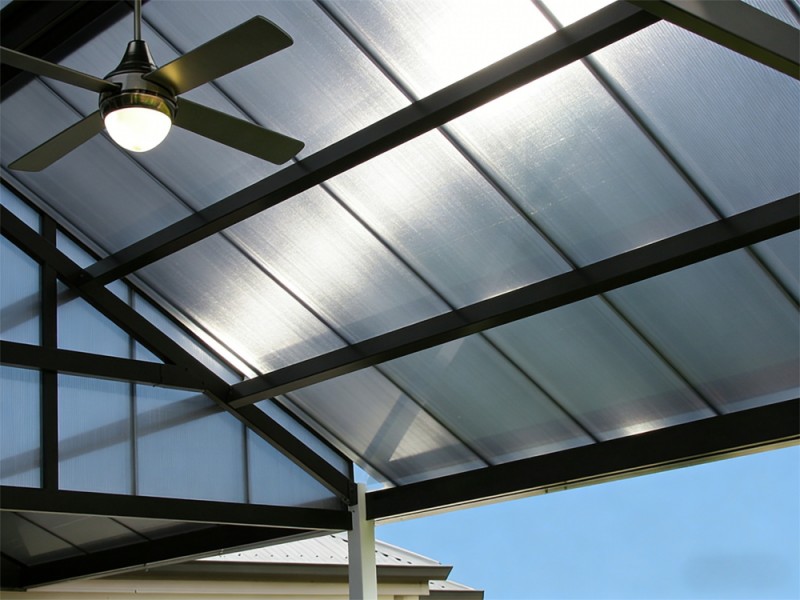
Silver-grey Polycarbonate Hollow Sheet is the top choice for canopies, ideal for projects requiring thermal insulation, sunshade and stain resistance.
Most silver-grey products feature a double-layer hollow structure (6–8mm common thickness) with silver-grey masterbatch blended during production, delivering multiple strengths: outstanding thermal insulation that reflects partial infrared rays, lowering temperatures under the canopy by 3–5℃ in summer to reduce stuffiness; optimized sunshade performance with 60%–70% light transmittance that filters harsh glare while maintaining soft interior lighting; excellent stain resistance as dust and smudges are barely visible, with rainwater enabling self-cleaning to cut routine maintenance.
With double-sided UV coating, silver-grey Polycarbonate Hollow Sheet boasts remarkable anti-aging performance with an 8–10 year service life. It fits bus waiting shelter canopies, residential carports and balcony awnings, balancing practicality and visual appeal.
2.3 Mandatory Performance Standards: UV Coating Is Indispensable to Avoid Subsequent Troubles
Cities constructing waiting shelters with Polycarbonate Hollow Sheet must prioritize UV coating and anti-aging performance to prevent frequent maintenance caused by substandard materials:
- UV Coating: A must-have feature with a thickness of no less than 50 microns, extending service life to 8–10 years. Sheets without UV coating will turn yellow and crack within only 2–3 years, raising replacement costs instead;
- Impact Resistance: Products shall have an impact strength of no less than 200kJ/m² to withstand collisions from small falling objects such as tree branches and gravel and prevent sheet breakage;
- Material Compatibility: Polycarbonate Hollow Sheet must be compatible with aluminum alloy frames and sealants. Special silicone sealants for PC sheets shall be used instead of ordinary construction adhesives to avoid corrosion from material incompatibility.