Product Specification for Polycarbonate (PC) Hollow Sheet
Product Model: PC-H (Hollow Type) / PC-S (Solid Type)
Implementation Standards: GB/T 2410-2008, GB 8624-2012, GB/T 18830-2009
Warranty Period: 10–15 years for outdoor use with double-sided UV coating; 15–20 years for indoor use
1. Product Overview
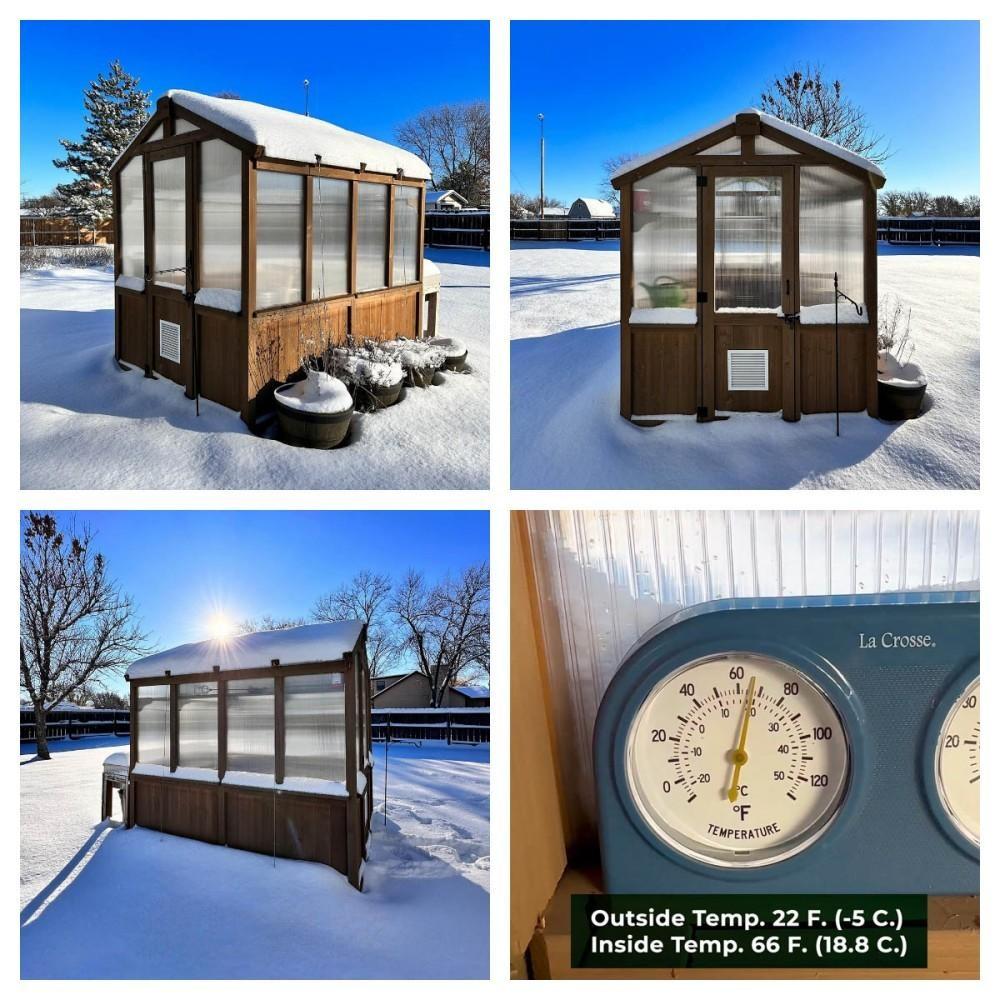
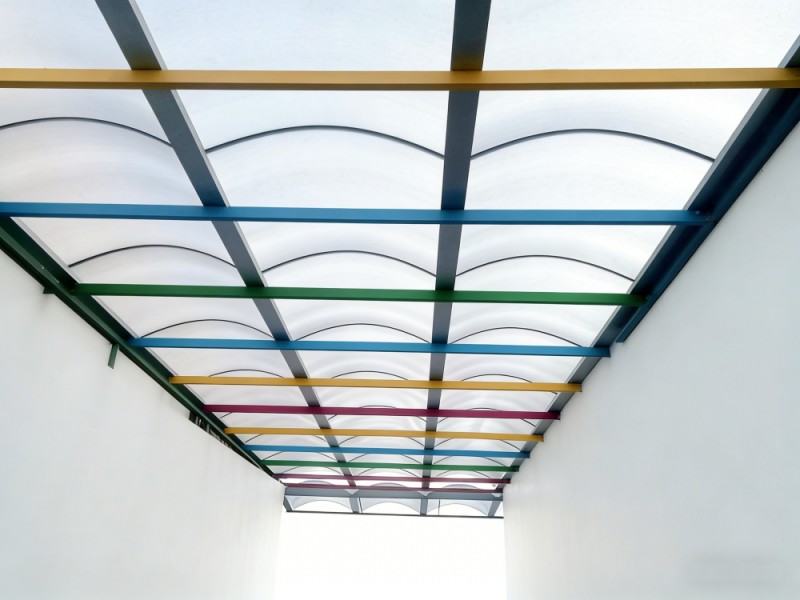
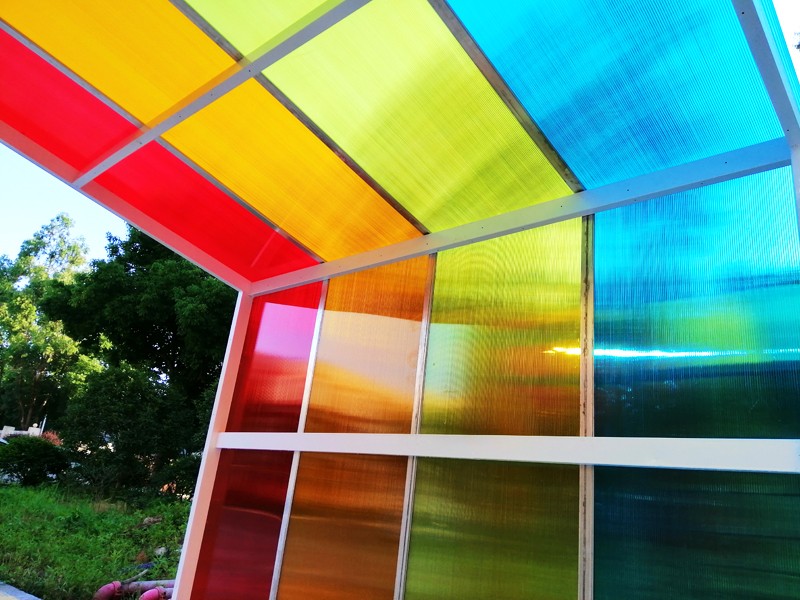
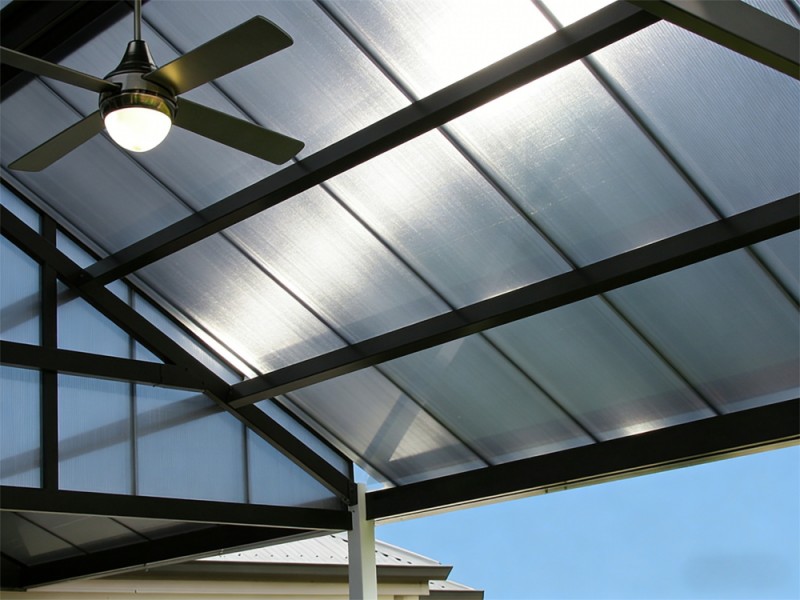
PC Hollow Sheet is a high-performance board extruded from 100% virgin polycarbonate resin, divided into two major series: hollow structure and solid structure. Equipped with double-sided UV coating technology, hollow heat-insulating design and impact-resistant modification treatment, it integrates light transmittance, weather resistance, thermal insulation and safety. Widely applied to underground parking lot entrances and exits, greenhouses, building daylighting roofs, canopies and other scenarios, it serves as an ideal substitute for traditional glass and ordinary plastic boards.
Core Advantages
- All-round weather resistance: Stable performance under extreme temperatures ranging from -60℃ to 120℃; passes 2000-hour QUV aging test with yellowing index ΔE<3
- High energy efficiency: The hollow structure delivers a thermal conductivity as low as 0.35W/(m·K), with 60% better thermal insulation than single-layer glass, lowering ambient temperature by 5–8℃ in summer
- Eco-friendly: Made of recyclable PC resin; releases no toxic gas during combustion and complies with RoHS environmental standards
2. Technical Specifications
2.1 Basic Performance Parameters
| Performance Index | Hollow Type (Double-layer, 8–12mm) | Solid Type (3–16mm) | Test Standard |
|---|---|---|---|
| Light Transmittance | 75%–80% | 85%–89% | GB/T 2410-2008 |
| UV Blocking Rate | ≥99% (UV coating thickness ≥50μm) | ≥99% (double-sided UV coating thickness ≥30μm) | GB/T 18830-2009 |
| Thermal Conductivity | 0.3–0.35W/(m·K) (colored) | 0.5–0.8W/(m·K) (colored) | GB/T 10294-2008 |
| Flame Retardant Grade | HB | HB | GB 8624-2012 |
| Sound Insulation | Weighted sound reduction index: 35dB | Weighted sound reduction index: 30dB | GB/T 19889-2005 |
| Minimum Bending Radius | ≥180 × board thickness (outdoor) | ≥150 × board thickness (outdoor) | Internal Test |
| Service Life | 10–15 years outdoor, 20 years indoor | 10–15 years outdoor, 20 years indoor | Verified by Accelerated Aging Test |
2.2 Common Models & Specifications
3. Application & Selection Guide
3.1 Application Scenarios
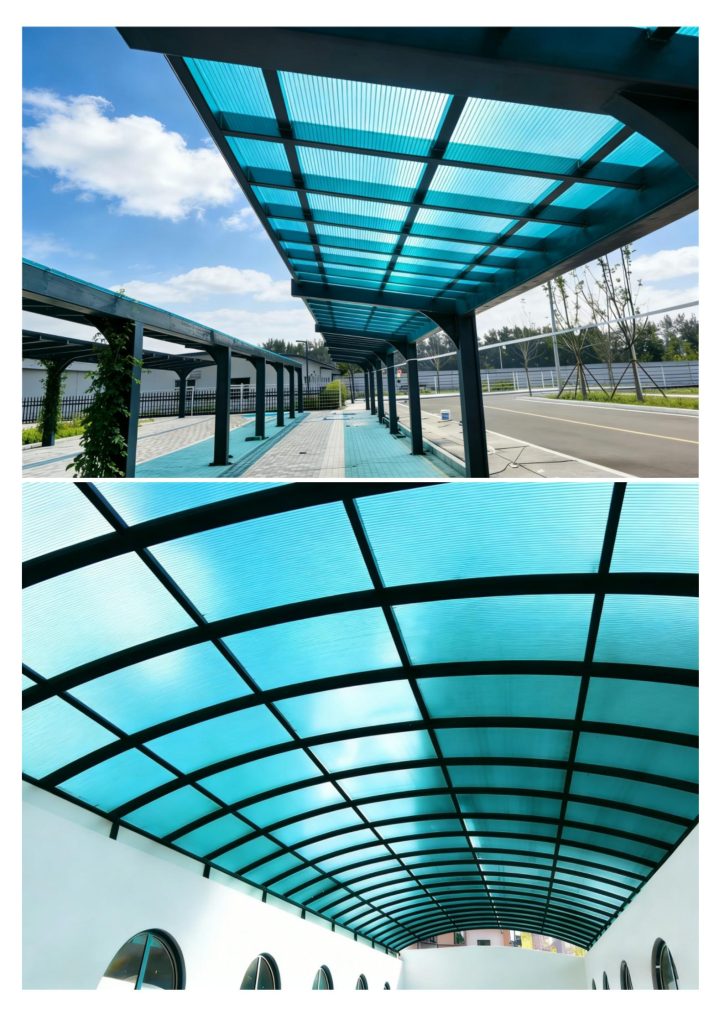
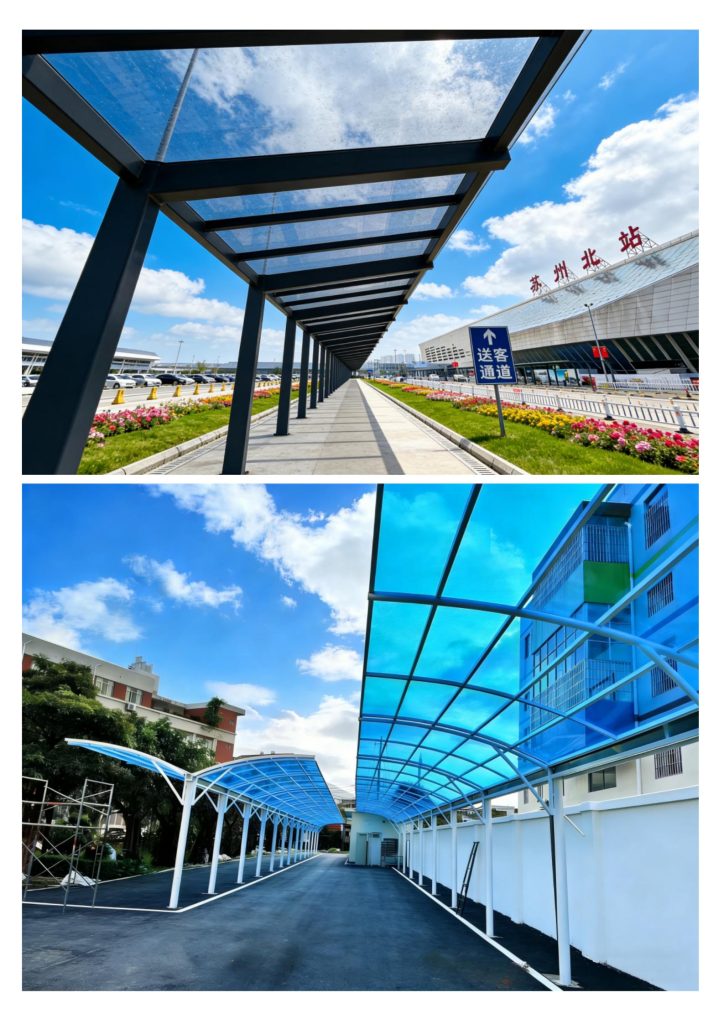
- Construction Engineering: Canopies for underground parking lot entrances and exits (8–10mm double-layer PC Hollow Sheet recommended); daylighting roofs of commercial complexes (12mm three-layer PC Hollow Sheet); curtain wall systems (5–8mm PC Solid Sheet)
- Agricultural Facilities: Covering materials for intelligent greenhouses (8mm anti-fog double-layer PC Hollow Sheet); ceilings of ecological restaurants (10mm three-layer PC Hollow Sheet). It reduces condensation by 70% and improves crop photosynthesis efficiency
- Transportation Facilities: Noise barriers for highways (8mm PC Solid Sheet); toll station canopies (10mm double-layer PC Hollow Sheet). Resistant to salt spray corrosion, suitable for coastal and heavily polluted areas
- Civil Scenarios: Villa sunrooms (10mm double-layer PC Hollow Sheet); balcony canopies (5mm PC Solid Sheet). Bendable to realize curved modeling
3.2 Scenario-based Selection Suggestions
| Application Scenario | Recommended Model | Core Selection Basis | Auxiliary Accessories |
|---|---|---|---|
| Underground parking lot entrances in Northern China | 10mm three-layer PC Hollow Sheet | Snow load resistance ≥50kg/㎡, heat preservation & anti-condensation | Hot-dip galvanized steel frame, EPDM rubber strips |
| Greenhouses in Southern China | 8mm anti-fog double-layer PC Hollow Sheet | Light transmittance ≥85%, anti-fog coating resistant to high humidity | Aluminum alloy press strips, neutral sealant |
| Coastal noise barriers | 8mm PC Solid Sheet | Salt spray corrosion resistance, sound insulation ≥45dB | 304 stainless steel fasteners |
| High-end sunrooms | 10mm double-layer PC Hollow Sheet | Soft light transmission, anti-glare, superior thermal insulation | Self-cleaning coating, hidden drainage system |
4. Transportation & Storage Standards
4.1 Transportation Requirements
- Lay flat during transportation; stacking height ≤1.2m, with soft buffer materials (e.g., pearl cotton) between layers to avoid deformation under pressure
- Cover with tarpaulin for outdoor delivery to prevent aging and adhesion of PE protective film caused by sunlight and rain
- Wrap with thermal insulation materials for transportation in low-temperature areas (≤-10℃) to avoid brittleness and damage
4.2 Storage Requirements
- Store in dry and cool warehouses away from direct sunlight, at least 1.5m away from heat sources such as radiators
- Lay boards flat on flat pallets with supporting spacing ≤1m; prohibit slant stacking
- Remove PE protective film within 1 week before installation to prevent permanent adhesion from long-term storage
5. Installation Specifications
5.1 Pre-installation Preparation
- Site Survey: Confirm installation dimensions and load requirements (e.g., clear height ≥2.2m for parking lot entrances), avoid fire pipes and ventilation openings
- Material Preprocessing: Place boards on site for more than 24 hours to reach ambient temperature; cut with special panel saws (≥10 teeth per inch) for smooth, burr-free edges
- Tool Preparation: Electric drill with special bits, level gauge, sealant gun; build stable scaffolding and wear safety belts for high-altitude operations
5.2 Installation Procedures
- Frame Fixation: Main keel adopts hot-dip galvanized steel pipe (60×40×2mm) with spacing ≤1.5m; secondary keel (40×30×1.5mm) with spacing ≤1m; connect with bolts to avoid welding deformation
- Board Laying: Reserve 5–8mm expansion gaps at joints; the distance from screw hole center to board edge shall be at least twice the hole diameter; screw spacing ≤300mm for boards thicker than 3mm
- Fixation Method: Fix with aluminum alloy press strips and EPDM rubber strips with compression ≥30%; never drill screws directly through boards
- Sealing Treatment: Fill joints with PC-compatible neutral silicone sealant (e.g., Dow Corning 791); sealant width ≥15mm and thickness ≥5mm, trowel flat without bubbles
5.3 Installation Notes
- Outdoor bending radius ≥180 × board thickness, indoor ≥150 × board thickness to prevent cracking from excessive bending
- Mark layout lines on PE protective film; do not scratch board surfaces with sharp tools
- Complete installation only after cement surfaces of new buildings are fully dried to prevent corrosion by moisture
6. Maintenance & Troubleshooting
6.1 Routine Maintenance
- Cleaning Cycle: Clean every quarter with warm water below 60℃ plus neutral detergent (e.g., dish soap) and soft cloth; steel wool and high-pressure water guns are forbidden
- Grease Removal: Wipe surface oil stains with soft cloth dipped in anhydrous alcohol; acid/alkaline cleaners shall not be used to corrode UV coating
- Seasonal Protection: Clear snow in winter in Northern China with soft brooms when snow thickness exceeds 10cm; maintain indoor humidity at 40%–60% to prevent dry cracking
6.2 Periodic Inspection Schedule
| Inspection Item | Inspection Cycle | Inspection Content | Disposal Method |
|---|---|---|---|
| Sealant | Every 2 years | Aging, cracking, peeling | Remove old sealant and reapply |
| UV Coating | Every 5 years | Yellowing, wrinkling, peeling | Repair with special UV repair agent |
| Frame Connectors | Annually | Loose bolts, rusted keels | Tighten bolts; polish rusted areas and apply anti-rust paint |
| Board Surface | Every quarter | Scratches, cracks, deformation | Repair small cracks with repair patches; replace severely damaged boards |
6.3 Common Fault Solutions
- Board Damage: Seal cracks ≤50mm temporarily with sealant then attach special repair patches; replace boards with cracks over 100mm and complete full sealing
- Water Seepage: Inspect joint seams and edge sealant; remove aged sealant, reapply new sealant and fasten press strips to ensure tight compression of rubber strips
- Coating Aging: Polish locally yellowed areas lightly with fine sandpaper then apply UV repair agent; replace boards for overall severe aging
7. Safety Warnings
- Recycled-material boards are prohibited for load-bearing or outdoor use, as they will become brittle and fail within 3–5 years
- Though flame-retardant, boards must be kept away from open flames; fire extinguishers shall be equipped in storage areas
- Standardize high-altitude installation operations to prevent falling boards from causing injuries or damage
Production Process of PC Hollow Sheet
Familiar to most people, PC Hollow Sheet is manufactured from polycarbonate and widely used as canopy daylighting material. Let’s learn about its production technology and workflow:
- Raw Material Incoming Inspection
Test melt index, molecular weight, impurities and moisture content. - Automated Production Line
Raw material proportioning, screw melting, die extrusion, shaping table, traction, tempering furnace, film coating, secondary traction, cutting. - Finished Product Inspection
Check specifications, quantity, appearance, color difference, impact resistance, horizontal combustion, tensile strength and thermal deformation. - Warehousing
Warehouse managers shall properly store finished goods and follow first-in first-out principle to keep inventory fresh. - Logistics & Delivery
Select appropriate transportation vehicles according to requirements, track logistics, load and unload goods to complete delivery.