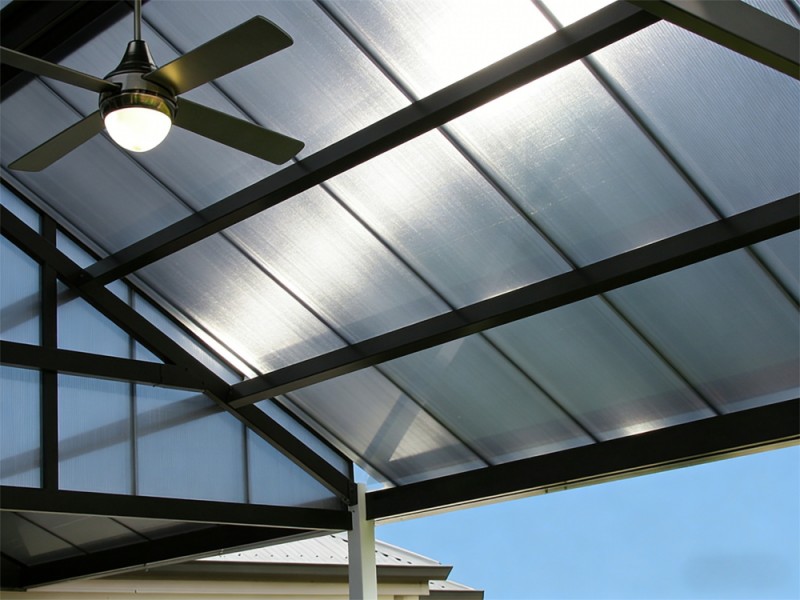
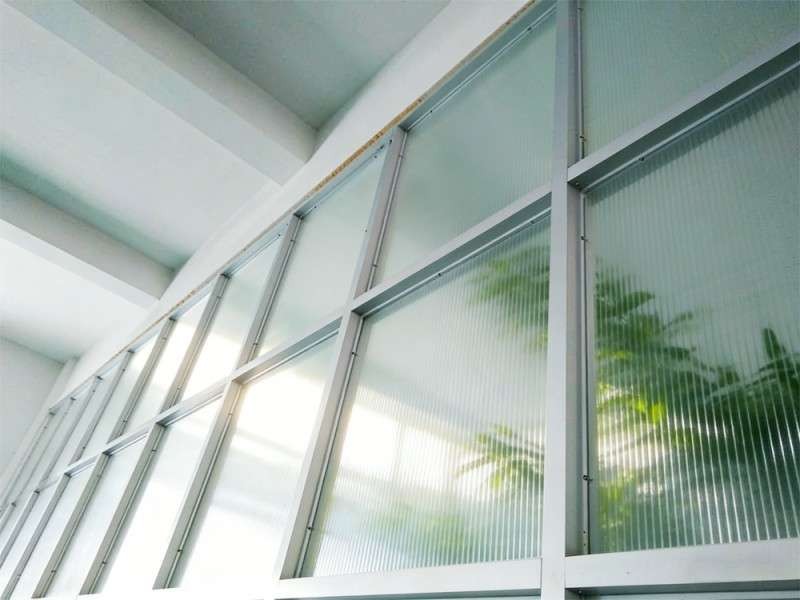
Performance Comparison of Polycarbonate Sheets and Glass in Greenhouse Applications
Polycarbonate sheets (represented by anti-fog hollow PC sheets) and glass (mainly tempered glass) are the two mainstream covering materials for greenhouses. They differ significantly in core performances including light transmittance, thermal insulation and weather resistance, which directly affect planting benefits and operating costs of greenhouses. A comparison from eight key dimensions is provided below, together with scenario-based material selection suggestions.
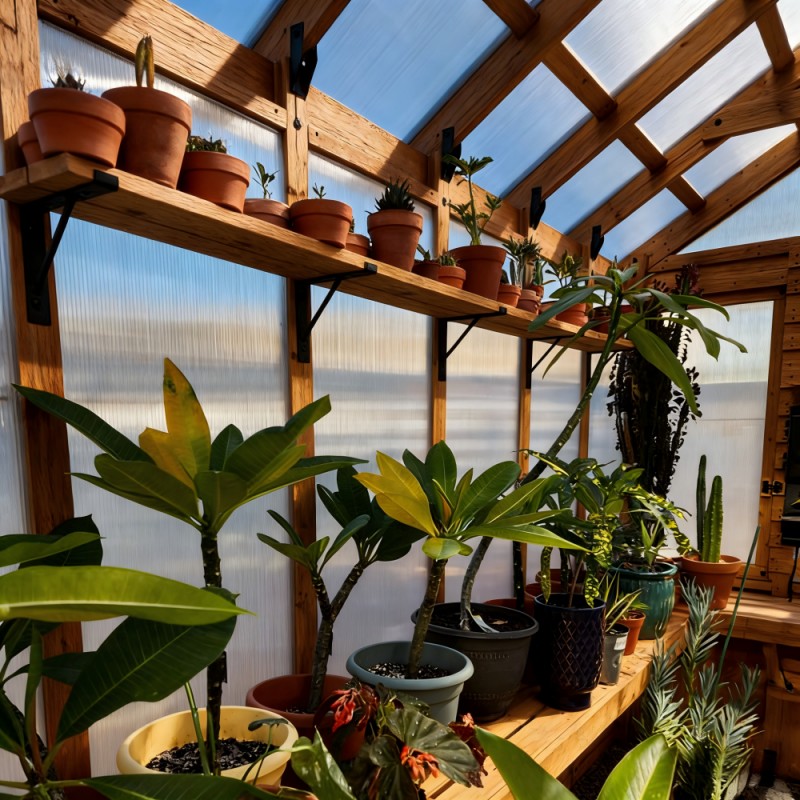
I. Core Performance Comparison for Core Greenhouse Demands
| Comparison Item | Polycarbonate Sheet (Anti-fog Hollow PC Sheet) | Glass (5–8 mm Tempered Glass) | Performance Analysis |
|---|---|---|---|
| Light Transmittance | Initial light transmittance: 80%–90%. Anti-fog coating maintains clarity under 95% humidity. Transmittance retention ≥80% after 5 years (with UV coating). | Initial light transmittance: 90%–92%. No fogging issue. Transmittance retention ≥90% after 5 years (without surface dirt). | Glass has slightly higher initial transmittance, yet anti-fog coating on polycarbonate sheets reduces light loss under high humidity. Glass maintains stable light transmission long-term thanks to scratch resistance. |
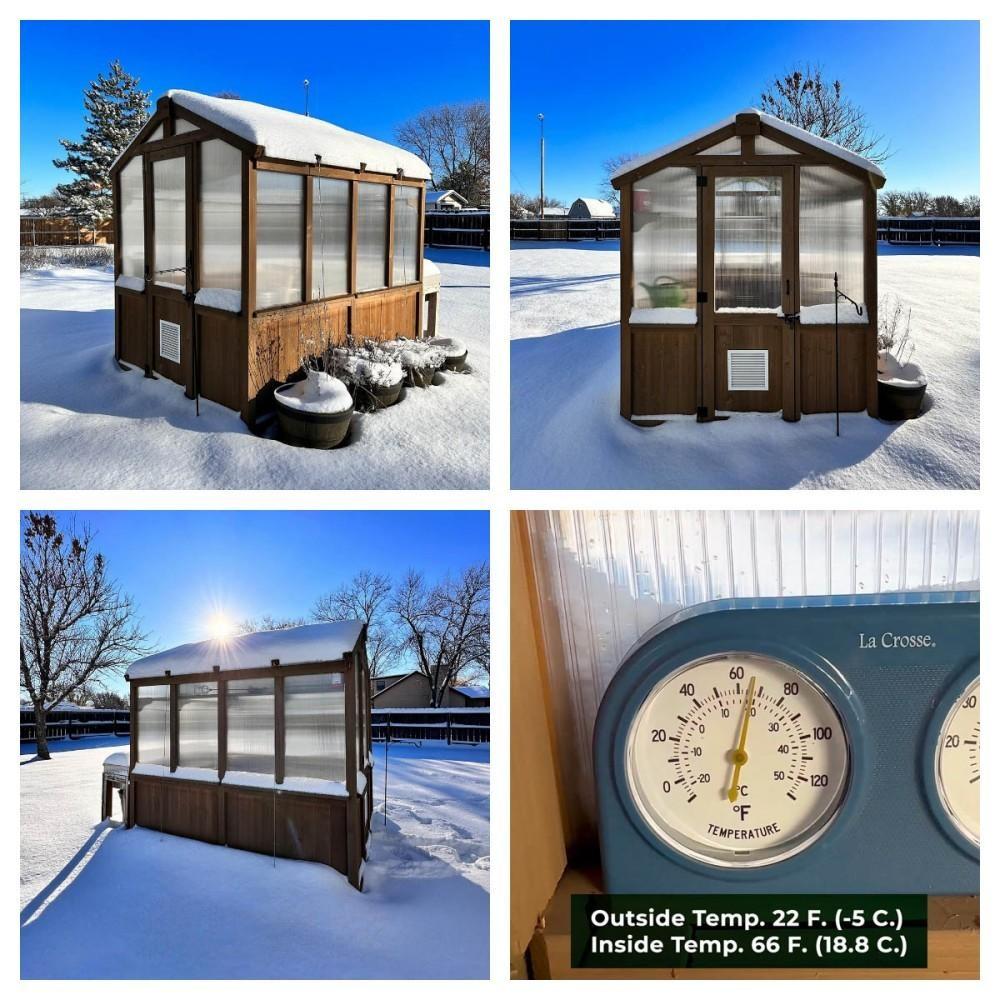
| Thermal Insulation | Double-wall hollow structure with thermal conductivity of 0.16–0.20 W/(m·K). Infrared blockers can be added to boost heat preservation. | Single-layer thermal conductivity: 0.8–1.0 W/(m·K). Double glazing required to improve insulation (0.3–0.5 W/(m·K)). | Polycarbonate sheets outperform single-layer glass greatly in thermal insulation; 20%–30% better than double insulating glass, ideal for energy-saving greenhouses in cold northern regions. |
| Impact Resistance | Impact strength over 200 kJ/m², 200 times that of glass. No brittle cracking at low temperatures (brittle point: −135°C). | Impact strength: 5–8 kJ/m². Prone to brittle fracture below −20°C. Sharp fragments form upon breakage, creating safety hazards. | Polycarbonate sheets excel in impact resistance. Suitable for hail-prone, windy zones and accessible greenhouses such as sightseeing greenhouses and seedling nurseries. |
| Snow & Wind Load Resistance | 8 mm double-wall polycarbonate sheet withstands snow load of 30–50 kg/㎡ and wind force Grade 10. Purlin spacing limited to ≤1.5 m. | 5 mm tempered glass withstands snow load of 50–80 kg/㎡ and wind force Grade 12. Purlin spacing can extend to 2–3 m. | Glass bears higher loads, suitable for large-span greenhouses in heavy snow areas. Polycarbonate sheets require closer purlin arrangement to compensate for load limits. |
| Weather Resistance | Reliant on UV coating (≥50 μm). Premium products serve 12–15 years. Coatings risk peeling under prolonged high humidity. | No coating required. Service life: 20–30 years. Acid & alkali resistant, anti-aging, mold-resistant surface. | Glass offers superior weather resistance with minimal maintenance. Polycarbonate sheets require periodic inspection of UV/anti-fog coatings; high-quality coatings narrow the service life gap. |
| Weight & Installation | 1.2–1.5 kg/㎡ (8 mm double-wall), only 1/12 the weight of glass. No heavy frame required; installation time shortened by 30%. | 12.5–20 kg/㎡ (5–8 mm). Heavy steel frame needed (30%–40% higher cost). Professional tools such as suction cups required for installation. | Lightweight polycarbonate sheets are perfect for greenhouse renovation or temporary construction without frame reinforcement. Glass suits permanent newly built greenhouses with longer construction cycles and higher framework costs. |
| Humidity Adaptability | Anti-fog coating eliminates fogging; condensed water slides directionally to reduce plant diseases. Proper roof slope required. | No fogging, yet condensed water drips easily (0.8–1.2 L/㎡ daily), raising humidity and disease risks. Anti-drip coating incurs extra costs. | Polycarbonate sheets are more advantageous for high-humidity crop greenhouses growing flowers and leafy vegetables. Glass needs additional anti-drip treatment. |
| Cost (10 ㎡) | Material, installation & frame: 2,100–3,400 RMB (anti-fog type). Annualized cost: 140–280 RMB. | Material, installation & steel frame: 3,000–4,800 RMB (single layer); 5,000–7,000 RMB for double glazing. Annualized cost:100–240 RMB. | Polycarbonate sheets feature lower upfront costs (40%–50% less). Higher annualized cost due to shorter lifespan. Glass demands greater initial investment but lower long-term annual cost for operations over 15 years. |
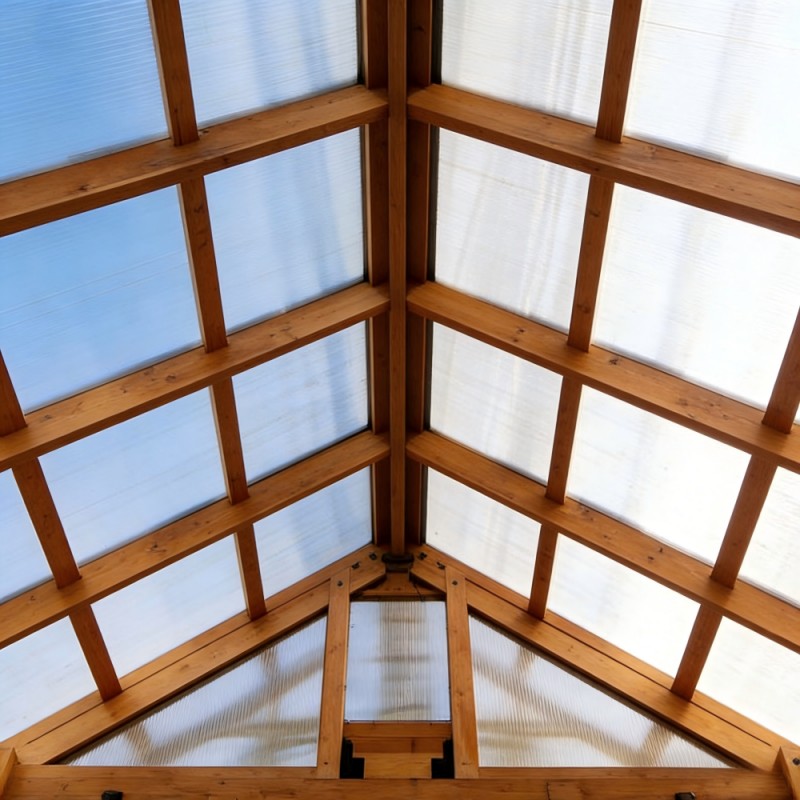
II. Suitable Application Scenarios
2.1 Scenarios Preferred for Polycarbonate Sheets
- Energy-saving greenhouses in cold northern regions: Better thermal insulation cuts winter heating consumption by 30%–40%, fit for off-season fruit and vegetable cultivation in North & Northeast China.
- High-humidity crop greenhouses: Anti-fog performance preserves light for flowers and leafy vegetables requiring 75%–95% humidity.
- Old greenhouse renovation & temporary facilities: Lightweight, no frame reinforcement needed; ideal for 5–10 year planting cycles and seedling houses.
- Windy & hail-prone regions: Strong impact resistance prevents shutdown losses caused by extreme weather in coastal areas and northwest plateaus.
2.2 Scenarios Preferred for Glass
- Long-term permanent high-end greenhouses: 20–30 year service life, suitable for sightseeing greenhouses, research facilities and high-value crop planting.
- Greenhouses in heavy snow zones: Superior snow load resistance reduces frequent snow removal work for locations with heavy snow in Northeast China and high-altitude regions.
- Low-maintenance remote large-scale farms: Scratch-resistant surface with little routine cleaning required.
- Crops demanding stable high light transmittance: Tissue culture seedlings and premium orchids need consistent long-term light transmission provided by glass.
III. Typical Practical Problems
| Material | Common Issues | Solutions | Severity |
|---|---|---|---|
| Polycarbonate Sheet | 1. Sand scratch risks in windy spring; 2. Anti-fog coating aging (low-grade products fail within 1–2 years); 3. Deformation caused by excessive purlin spacing | 1. Wear-resistant coating + wind barriers; 2. Co-extruded anti-fog sheets; 3. Tighten purlin spacing according to load standards | Controllable via proper selection and installation |
| Glass | 1. Brittle fracture below −20°C; 2. Plant diseases induced by dripping condensate; 3. High framework cost due to heavy weight | 1. Low-temperature tempered glass (−40°C resistant); 2. Extra anti-drip coating (+15%–20% cost); 3. Optimize frame design during construction | High risk of low-temperature cracking; dripping issues require additional investment |
IV. Material Selection Guidelines Based on Priority Demands
- Priority: Low upfront cost & easy installation → Choose anti-fog polycarbonate sheets for renovation, temporary planting and budget-limited farmers.
- Priority: Long-term operation & low maintenance → Choose tempered glass with anti-drip coating for enterprise farms and projects operating over 15 years.
- Priority: Thermal insulation & high-humidity crops → Choose anti-fog polycarbonate sheets for northern energy-saving greenhouses growing flowers and leaf vegetables.
- Priority: Snow load & extreme weather resistance → Choose glass or triple-wall polycarbonate sheets for heavy snow and hail-prone areas.
V. Conclusion: No Universal Best Material, Only the Most Suitable
Neither polycarbonate sheets nor glass is absolutely superior. Selection depends on service life, crop varieties, local climate and budget.
- Polycarbonate sheets offer cost advantages for short-term planting (5–10 years), high-humidity crops, northern energy-saving greenhouses and old shed renovation.
- Glass delivers greater long-term value for long-term operation (≥15 years), high-value crops, heavy snow zones and low-maintenance requirements.
A hybrid solution is also feasible: polycarbonate sheets for roofs and glass for side walls. Inspect sealing at joints to avoid water leakage.