What is Polycarbonate Sheet? Where Can It Be Used?
1. Brief Introduction to Polycarbonate Sheet
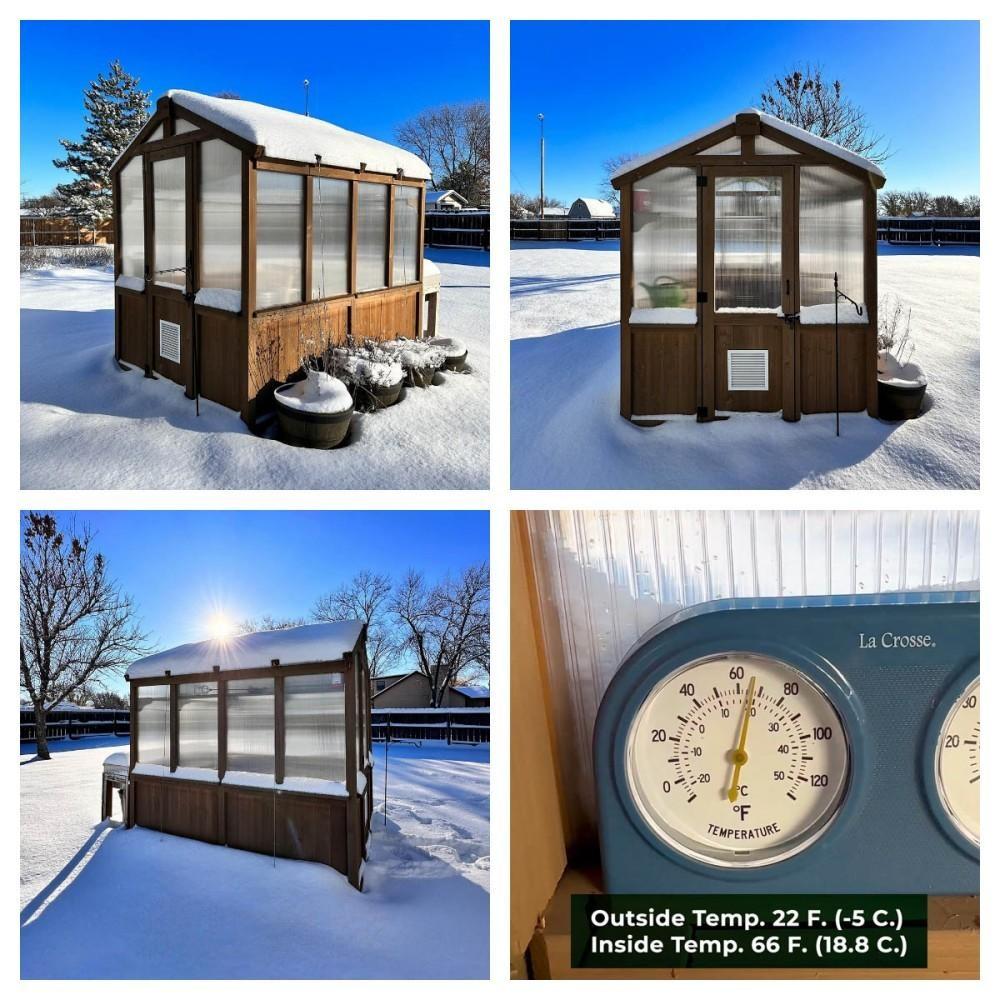
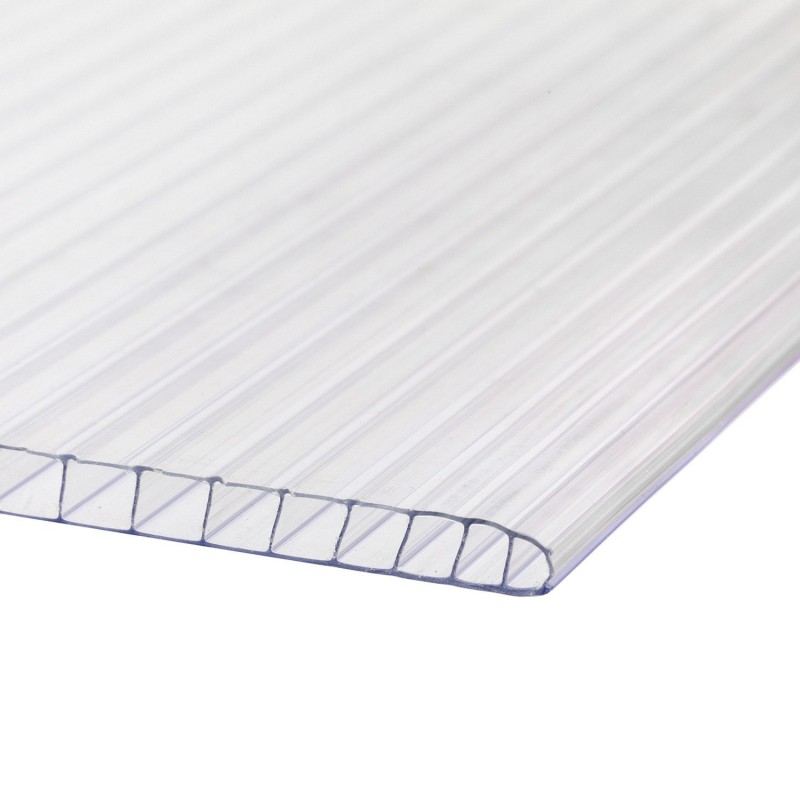
Polycarbonate sheet, also known as multi-wall hollow PC sheet, is manufactured from high-quality polycarbonate resin via co-extrusion technology. Featuring double-wall or multi-wall hollow structure, it delivers outstanding thermal insulation performance. Equipped with co-extruded UV protective layer on one or both sides, it can withstand harsh outdoor weather conditions and maintain stable physical properties within the temperature range of -40°C to +120°C without embrittlement or softening.
The material is extremely lightweight: polycarbonate sheet weighs only 16% of glass with the same thickness, greatly lowering transportation cost and simplifying on-site installation. Despite light weight, it boasts excellent impact resistance, 250–300 times stronger than ordinary glass, earning the reputation of “unbreakable glass”.
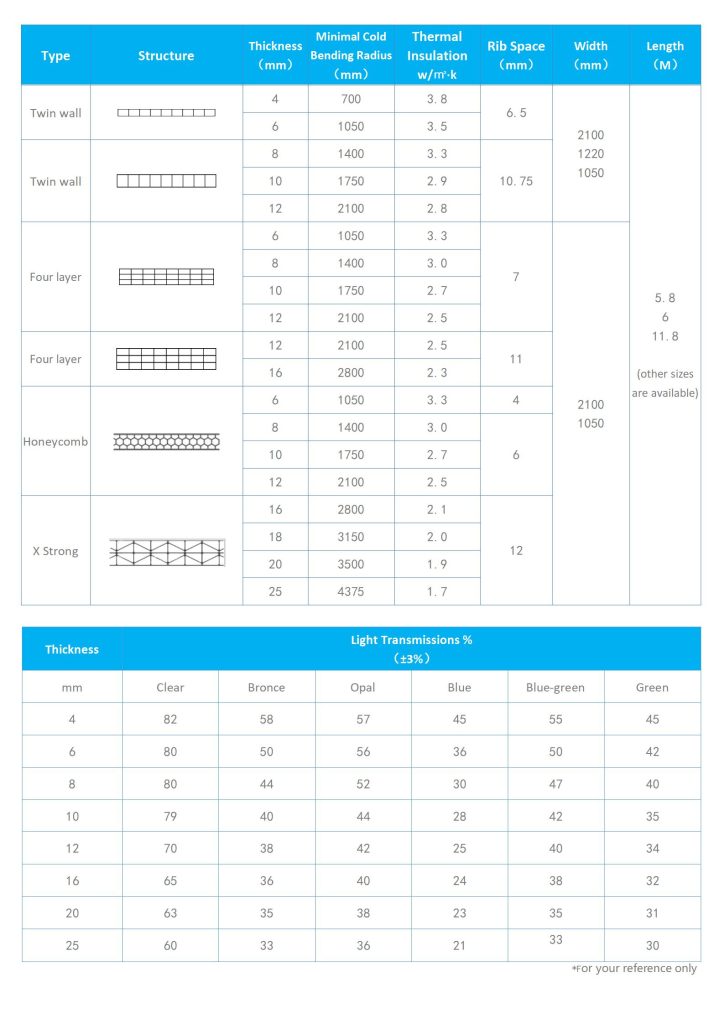
It balances light transmission and heat reflection flexibly. The light transmittance of polycarbonate sheet can be adjusted from 25% up to 80% according to color and structure, creating comfortable natural lighting. Superior thermal insulation reduces cooling and heating consumption to save energy costs. Furthermore, qualified polycarbonate sheet reaches Class B1 flame retardant standard. It self-extinguishes once away from fire sources and releases no toxic fumes during combustion, safe for buildings with fire prevention requirements.
Premium products adopt double-sided 50μm UV co-extrusion coating, effectively blocking ultraviolet rays and slowing yellowing and aging, ensuring long service life under open-air exposure. Multiple types are available, including twin-wall, four-wall, S-shaped, U-lock and interlocking polycarbonate sheet for different engineering demands.
2. Core Advantages of Polycarbonate Sheet
- Outstanding weather resistance, stable performance from -40°C to +120°C
- Ultra-light weight for convenient transportation and installation
- High impact strength, durable and anti-breakage
- Adjustable light transmittance for flexible daylight design
- Excellent thermal insulation, energy-saving and cost-efficient
- Class B1 flame retardant, low smoke and non-toxic during fire
- Optional double-sided UV coating for long outdoor service life
- Good sound insulation and cold bending forming capacity
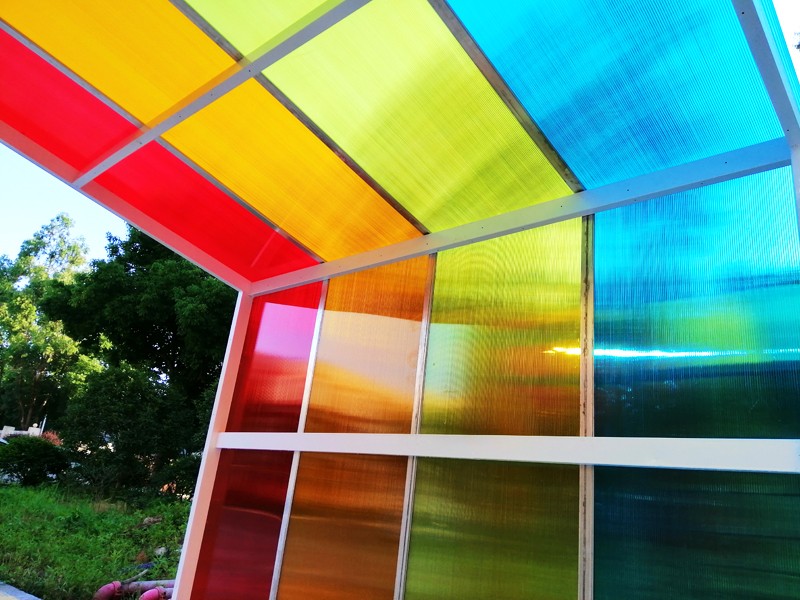
- Rich color options: clear, opal, blue, green, bronze and customized shades
3. Technical Performance Parameters Table
| Performance Item | Unit | Standard Value |
| Specific Gravity | g/cm³ | 1.2 |
| Light Transmittance (clear twin-wall sheet) | % | 25 ~ 80 |
| Coefficient of Linear Thermal Expansion | mm/m·℃ | 0.065 |
| Continuous Service Temperature | ℃ | -40 ~ +120 |
| Tensile Strength | MPa | ≥60 |
| Flexural Strength | MPa | ≥100 |
| Elongation at Break | % | >100 |
| Impact Strength | J/m | 850 |
| Flame Resistance Class | — | B1 (Self-extinguishing) |
| UV Barrier Rate | % | ≥99 (with UV coating) |
| Sound Insulation (10mm twin-wall sheet) | dB | ~20 |
4. Product Structure & Feature Comparison
| Structure Type | Main Features | Recommended Thickness | Typical Application |
| Twin-wall Polycarbonate Sheet | High light transmission, low cost, lightweight | 4mm–12mm | Carports, simple canopies, small skylights, southern greenhouses |
| Four-wall Multi-wall Polycarbonate Sheet | Better thermal insulation & rigidity | 10mm–25mm | Northern agricultural greenhouses, sunrooms, large daylight roofs |
| S-shaped Polycarbonate Sheet | 20% higher stiffness, wider purlin spacing | 8mm–16mm | Large-span roofing, pedestrian canopy |
| U-lock Polycarbonate Sheet | No drilling on panel surface, superior waterproof | 16mm–25mm | Stadium roof, railway station canopy, commercial daylighting system |
5. Applications of Polycarbonate Sheet
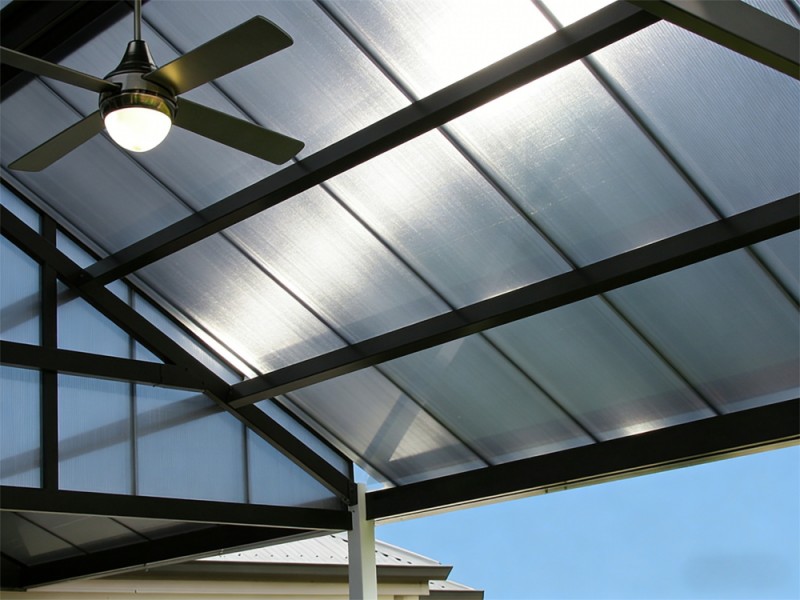
Polycarbonate sheet is widely adopted for architectural daylighting, outdoor canopies, agricultural greenhouses, interior decoration and numerous construction projects. It has become one of the most popular daylighting materials globally.
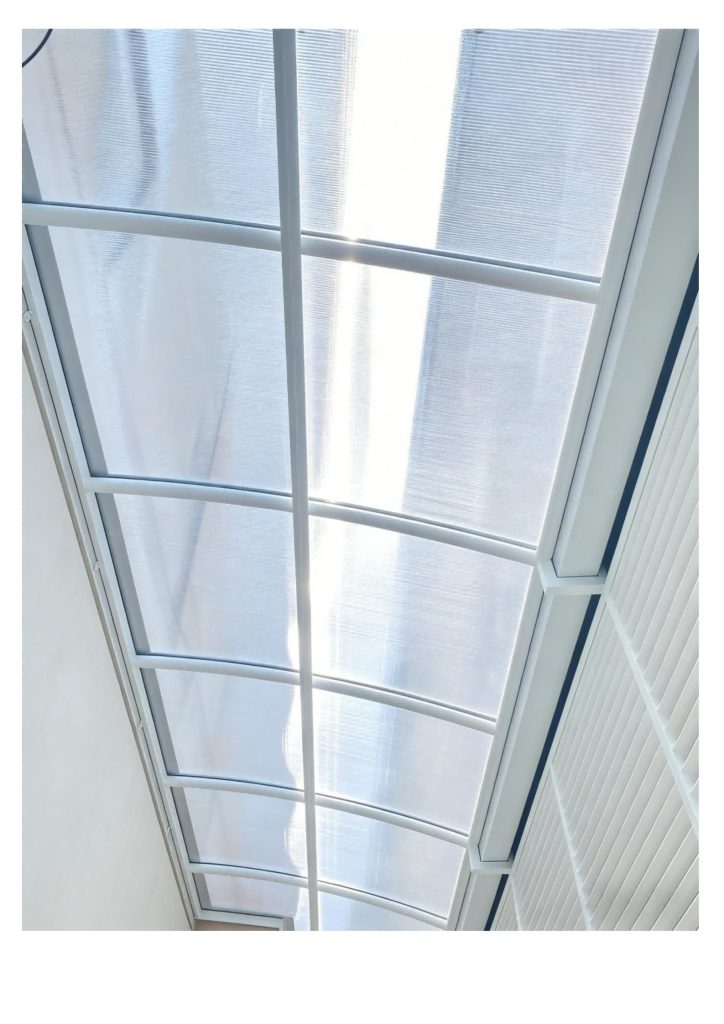
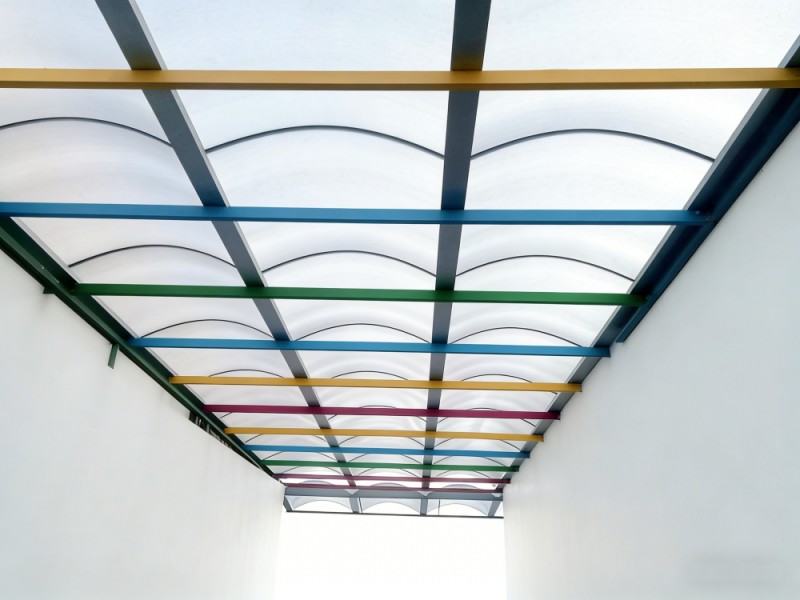
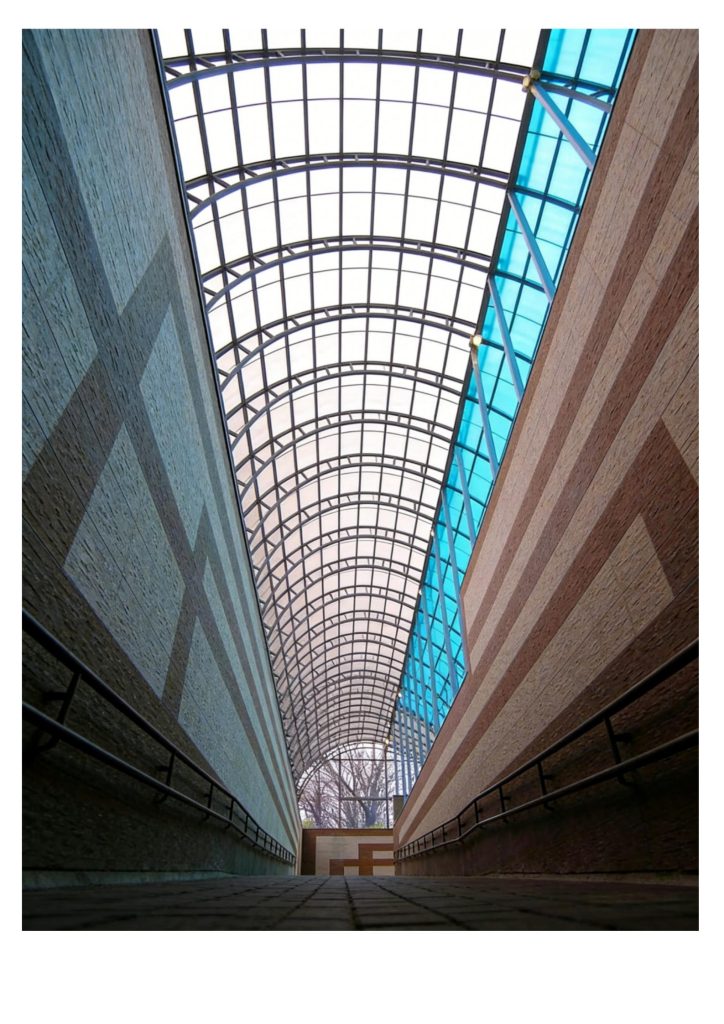
In construction industry, it is extensively used for skylights, pergolas, agricultural greenhouses, pedestrian overpass roofs, stadium roofing, carports, railway station roofs, sunrooms and indoor partition walls. It is also commonly applied in advertising industry for light boxes, billboards and signage panels.
Other scenarios include noise barriers, swimming pool roofing, shopping mall atrium daylighting, factory daylight belts and landscape architecture. Different structures and colors can be selected to match thermal insulation, light control and aesthetic requirements of each project.