
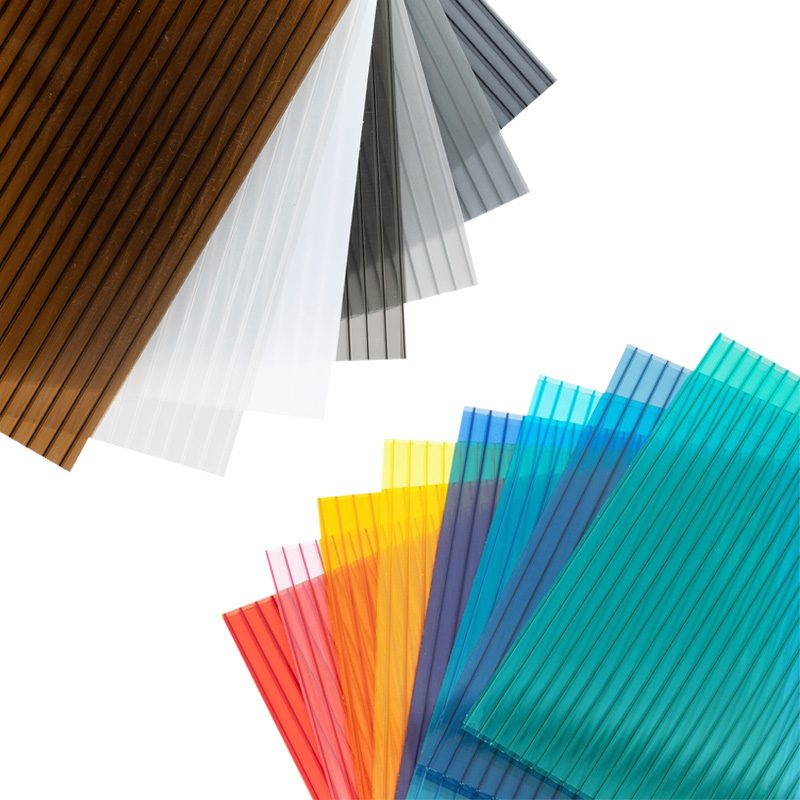
I. Introduction: Definition and Value of Polycarbonate Hollow Sheets
Polycarbonate (PC) hollow sheet is a type of hollow panel manufactured from polycarbonate materials. It features light weight, high strength, superior weather resistance, ultraviolet (UV) protection, sound insulation, thermal insulation and anti-condensation properties, and is widely applied in construction, agriculture, decoration and other fields. As a high-tech, high-performance energy-saving and environmentally friendly plastic panel, it has become an indispensable material for modern buildings and agricultural facilities.
The core strengths of polycarbonate hollow sheets lie in the perfect combination of excellent light transmittance and impact resistance, along with favorable thermal insulation and weather resistance, enabling long-term service in harsh environments. Amid the global emphasis on energy conservation, emission reduction and sustainable development, the market demand for this energy-efficient material keeps growing.
From a global perspective, this paper comprehensively reviews the invention and evolution of polycarbonate hollow sheets, focusing on their technological advancements in materials and production processes as well as expanding application scenarios. It also introduces mainstream high-end manufacturing equipment worldwide, providing references for industrial analysis and new product development.
II. Invention and Early Development of Polycarbonate Hollow Sheets
2.1 Birth and Initial Application of Polycarbonate Materials
The invention of polycarbonate hollow sheets is inseparable from the development of polycarbonate. Polycarbonate is a polymer containing carbonate groups on its molecular chain, named after the internal -O-C(=O)-O- functional groups. Its development dates back to the discovery of Bisphenol A (BPA) in the mid-19th century, a key monomer for polycarbonate production.
In the mid-20th century, researchers at General Electric (GE) launched studies on the polymerization of Bisphenol A. Pioneering work conducted by Dr. Hermann Schnell and Dr. Daniel W. Fox led to the creation of a tough, transparent and heat-resistant material — polycarbonate. In 1953, GE launched the first polycarbonate panel under the brand name “Lexan”, marking the official commercialization of polycarbonate materials.
Thanks to high impact resistance, optical clarity and dimensional stability, early polycarbonate panels were primarily used in aerospace and military sectors, such as aircraft canopies and bulletproof windows. Nevertheless, the specific product concept of polycarbonate hollow sheets had not yet taken shape during this period.
2.2 Formation of the Polycarbonate Hollow Sheet Concept
The concept of polycarbonate hollow sheets emerged to meet the daylighting needs of agricultural greenhouses and buildings. In the 1960s, polycarbonate was adopted to produce hollow sheets, which were mostly single-layer structures with relatively limited functions.
From the late 1960s to the early 1970s, the drawbacks of traditional glass and plastic film as greenhouse covering materials became increasingly prominent alongside agricultural modernization. Glass boasts good light transmittance but is heavy and fragile; plastic film is lightweight yet poor in durability and thermal insulation. Against this backdrop, polycarbonate was trialed for greenhouse construction, and the concept of polycarbonate hollow sheets as a new type of greenhouse covering material came into being.
In the 1970s, Europe took the lead in developing double-layer and multi-layer polycarbonate hollow sheets, regarded as the fourth-generation greenhouse covering material. This milestone drove the further development of the industry. The double-layer structure greatly enhanced thermal insulation performance, giving the product distinct advantages for greenhouse applications.
2.3 Global Popularization and Initial Applications
After its invention, the polycarbonate hollow sheet was first promoted and applied in developed countries across Europe and America. From the mid-1970s to the early 1980s, it gained growing popularity in European and North American markets, mainly used for agricultural greenhouses and daylighting of small buildings.
In the mid-1980s, polycarbonate hollow sheets rapidly penetrated the global architectural decoration material market. Statistics show that since the late 1980s, the global sales volume has maintained an annual growth rate of 20%, reflecting strong market demand and development potential.
In Asia, Japan and South Korea were the first to introduce relevant production technologies and application concepts. From the late 1980s to the early 1990s, polycarbonate hollow sheets were widely used in agricultural greenhouses and commercial buildings in these regions. Meanwhile, as China deepened reform and opening-up, the product entered the Chinese market, which initially relied entirely on imports.
III. Technological Evolution and Innovation of Polycarbonate Hollow Sheets
3.1 Progress and Application of Material Science
The technological advancement of polycarbonate hollow sheets is first reflected in the continuous innovation of material science. Evolving from ordinary polycarbonate to composite materials blended with various functional additives, the overall performance of the products has been significantly improved.
The development of UV protection technology stands as a vital milestone in material upgrading. Early polycarbonate panels were prone to yellowing and degradation under long-term UV exposure, which severely restricted their outdoor application. To address this problem, researchers developed the technology of co-extruding UV-resistant coatings on panel surfaces. The additional high-concentration UV coating effectively prevents yellowing and extends the service life of polycarbonate hollow sheets from 3 years to more than 10 years.
Improved flame retardancy is another major achievement of material innovation. As building safety standards become stricter, higher requirements have been put forward for the flame resistance of polycarbonate hollow sheets. By adding flame retardants to raw polycarbonate materials, the products have reached the Class B1 flame retardant standard, which enables self-extinguishing after leaving fire and avoids toxic gas emission during combustion.
In addition, recyclability and environmental friendliness have become key directions for material research. With rising environmental awareness, researchers are committed to developing recyclable polycarbonate materials and production processes to reduce environmental pollution. Progress has also been made in the research of biodegradable polycarbonate, opening up new possibilities for the sustainable development of polycarbonate hollow sheets.
3.2 Innovation and Development of Structural Design
The structural design of polycarbonate hollow sheets has evolved from simple to complex, and from single-function to multi-functional. Early products adopted a single solid structure, which only provided basic daylighting and protection.
The emergence of double-layer hollow structures marked a major breakthrough. Developed in Europe in the 1970s, this structure creates an internal air interlayer that greatly boosts thermal insulation, with a maximum indoor-outdoor temperature difference of 6℃ and reduced building energy consumption. It soon became the mainstream choice for roofs of industrial workshops and greenhouses.
With technological progress, multi-layer polycarbonate hollow sheets were developed one after another. Structures with three, four or even more layers further enhance thermal insulation, sound insulation and structural strength, enabling the products to meet the demands of ordinary daylighting roofs as well as high-standard commercial buildings and public facilities.
The invention of S-shaped polycarbonate hollow sheets represents another important structural innovation. Taiwan Chengcheng Industrial Co., Ltd. of China filed a patent for this product on July 4, 2006. By designing internal ribs into continuous S-shaped profiles, it delivers better deflection resistance and wind & snow load capacity than ordinary hollow sheets of the same thickness. In 2007, Switzerland-based NOTZ launched a similar product named “polisanke” (serpentine polycarbonate hollow sheet). Later, Chile’s Polygal and other enterprises joined production, promoting the global application of S-shaped hollow sheets.
Moreover, honeycomb-structured polycarbonate hollow sheets have enriched structural diversity. Featuring a higher strength-to-weight ratio and superior thermal insulation, they are well-suited for large-span buildings and scenarios with strict insulation requirements.
3.3 Innovation and Upgrade of Production Processes
The production processes of polycarbonate hollow sheets have developed from rudimentary manual operation to fully automated production. Extrusion technology is the core of production. Early simple extrusion equipment suffered from low efficiency and unstable product quality.
The application of co-extrusion technology is a pivotal leap. This technology enables uniform UV coating on panel surfaces, instead of simply mixing UV absorbers into raw materials, thus enhancing UV resistance and material stability. The UV-PC co-extrusion equipment and technology developed by Italy’s OMIPA have been adopted by many leading polycarbonate hollow sheet manufacturers worldwide. After continuous research, the technical team of Aozi has developed products with a 90-micron UV coating, which passed the 10,000-hour anti-aging test.
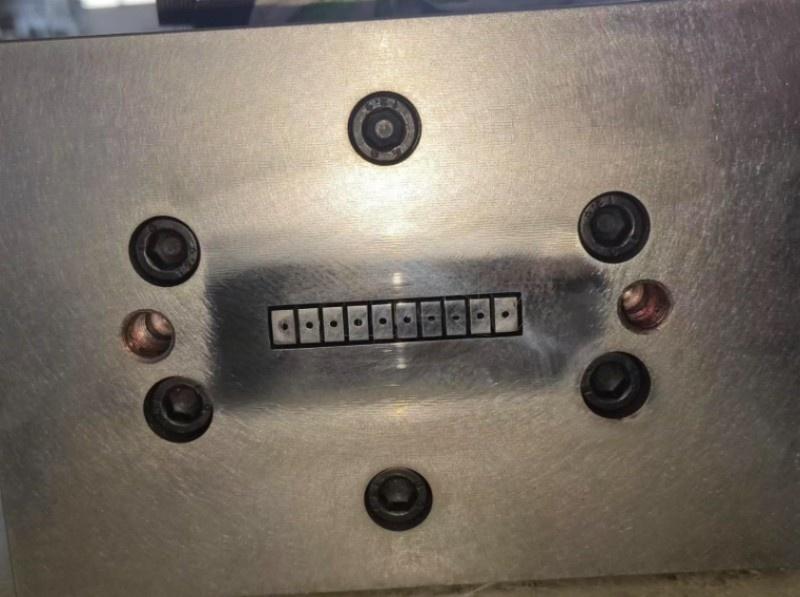
Optimized mold design also contributes to process upgrading. The application of Computer Aided Design (CAD) and Computer Aided Manufacturing (CAM) technologies has greatly improved the precision and complexity of molds, supporting the production of elaborate structures. In particular, upgraded molds for UV absorber extrusion ensure the uniformity and stability of UV coatings.
The adoption of automated production lines symbolizes the modernization of manufacturing processes. Modern production lines adopt advanced automatic control systems to realize full-process automation including raw material conveying, melt extrusion, forming, cooling, cutting and packaging, which significantly improves production efficiency and product stability. For instance, Guangmei New Material Technology Co., Ltd. operates 15 automated production lines with an annual output of 32,000 tons, demonstrating the large-scale and high-efficiency characteristics of modern production.
Furthermore, the advancement of surface treatment technology endows polycarbonate hollow sheets with additional functions such as anti-drip, self-cleaning and scratch resistance, further expanding their application scope.
IV. Expansion and Deepening of Application Fields
4.1 Wide Applications in the Construction Industry
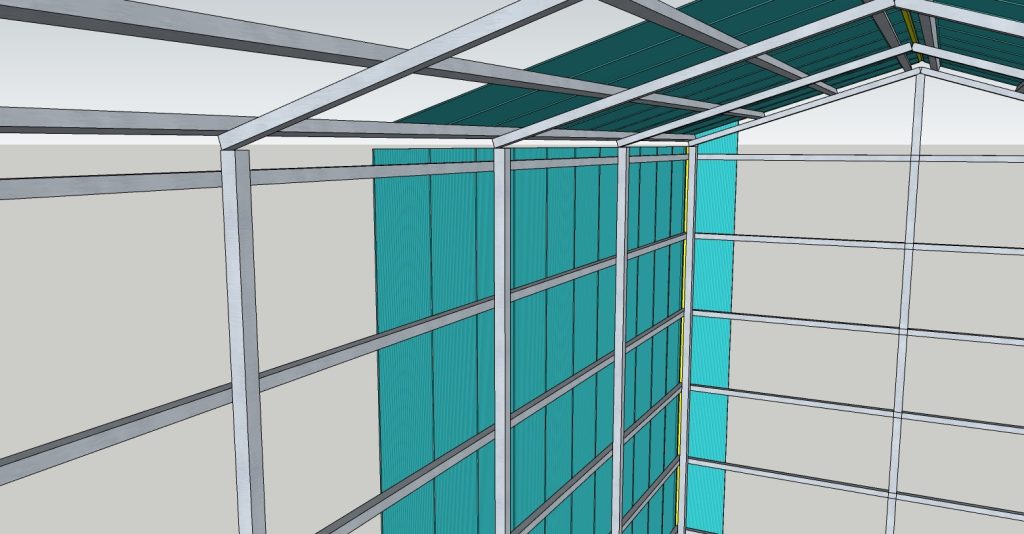
The construction sector is the largest application field for polycarbonate hollow sheets, which deliver unique advantages for roofs, walls and interior decoration. Building roofs are among the earliest and most mainstream application scenarios. Featuring light weight, high strength and good light transmittance, polycarbonate hollow sheets are ideal alternatives to traditional glass roofs. They are widely used for large-span daylighting roofs of commercial buildings, stadiums and public facilities, creating bright and transparent interior spaces.
Building exterior walls are another key application area. Polycarbonate hollow sheets can be used for exterior wall decoration and daylighting, achieving effective energy saving. Double-layer or multi-layer wall systems form reliable thermal insulation layers to reduce heat loss of buildings.
Interior decoration is an emerging application field. With desirable light transmittance, flexibility and rich color options, polycarbonate hollow sheets are widely used for indoor partitions, suspended ceilings and decorative modeling. Combinations of sheets in different colors and textures create diverse interior styles.
Sound barriers are a special application scenario. Polycarbonate hollow sheets outperform glass and acrylic sheets of the same thickness in sound insulation, with a sound insulation gain of 3-4dB compared with glass. Therefore, they are the preferred material for noise barriers along highways worldwide.
In line with increasingly stringent building energy efficiency standards, polycarbonate hollow sheets are widely used in energy-saving buildings. They have a lower thermal conductivity (K-value) than ordinary glass and other plastic materials, with thermal insulation performance 7% to 25% higher than glass, and a maximum heat insulation rate of 49%, which effectively cuts heat loss and makes them ideal energy-saving building materials.
4.2 Innovative Applications in the Agricultural Industry
Agriculture is one of the earliest application fields of polycarbonate hollow sheets, especially for greenhouse construction. Compared with traditional glass and plastic film, polycarbonate hollow sheets have outstanding light transmittance, thermal insulation, impact resistance and weather resistance, creating a favorable growing environment for crops.
The development of anti-drip polycarbonate hollow sheets is a major innovation for agricultural use. Special surface treatment prevents condensate droplets from forming, avoiding crop damage and improving light transmittance and thermal insulation. Such products are particularly suitable for environments with large diurnal temperature differences and high humidity, maintaining a stable microclimate for crop growth.
Polycarbonate hollow sheets are also increasingly applied in breeding facilities. They provide good ventilation and daylighting as well as reliable thermal insulation, creating a comfortable living environment for livestock. In cold regions, their thermal performance effectively reduces heating costs and raises breeding benefits.
Agricultural lighting is a new development direction. The combination of polycarbonate hollow sheets and LED lighting technology creates efficient and energy-saving agricultural lighting systems for precise light regulation for plant growth.
In addition, polycarbonate hollow sheets are applied to agricultural irrigation and sunshade systems, delivering comprehensive solutions for modern agriculture.
4.3 Expanded Applications in Transportation and Industrial Sectors
In the transportation industry, polycarbonate hollow sheets are used for public transit facilities and vehicles. For public transit infrastructure, they are widely adopted for canopies and sunshades of bus stops, subway platforms and waiting pavilions due to good light transmittance and protective performance.
For vehicles, their light weight, high strength and impact resistance make them suitable for car sunroofs, train windows and ship daylighting windows. Especially for new energy vehicles, the thermal insulation of polycarbonate hollow sheets helps lower interior temperature, reduce air conditioning energy consumption and improve energy efficiency.
In the industrial sector, polycarbonate hollow sheets are mainly used for daylighting and ventilation systems of factory buildings and warehouses. They provide large-area natural daylighting to cut the use of artificial lighting and reduce overall building energy consumption with reliable thermal insulation.
Equipment protection is another important application. Polycarbonate hollow sheets shield industrial equipment while allowing light transmission for convenient operation and observation. They are also ideal protective materials for explosion-proof environments.
Application in special environments is an expanding direction. With excellent weather resistance and chemical stability, polycarbonate hollow sheets adapt well to harsh conditions such as high humidity, heavy corrosion and intense UV radiation, providing reliable daylighting and protection solutions for chemical, electroplating, sewage treatment and other industries.
4.4 Emerging Application Fields and Future Trends
Driven by technological innovation, polycarbonate hollow sheets are entering new application fields. Photovoltaic integration is a promising direction. Combining solar cells with polycarbonate hollow sheets creates new building materials that realize both power generation and daylighting. Such photovoltaic hollow sheets can be installed on building roofs and exterior walls to achieve self-sufficiency in building energy.
Smart polycarbonate hollow sheets represent another promising trend. Embedded sensors, controllers and actuators enable automatic regulation of light, temperature, humidity and other environmental parameters to create smarter and more comfortable indoor environments.
Decoration and art have become new growth points. The favorable light transmittance, processability and rich color options of polycarbonate hollow sheets provide more creative possibilities for designers and artists, ranging from interior decoration to public art installations.
The medical and healthcare industry is also a new application area. Specially treated polycarbonate hollow sheets filter harmful rays while retaining beneficial light, creating healthy and comfortable lighting environments for hospitals, sanatoriums and rehabilitation centers.
In the future, with the continuous progress of material science, manufacturing and information technology, polycarbonate hollow sheets will have more diversified functions and superior performance, serving to create more comfortable, safe and energy-efficient living and working environments for human beings.
V. Overview of Global High-End Manufacturing Equipment for Polycarbonate Hollow Sheets
5.1 Leading Global Manufacturers and Their Technical Advantages
The global high-end manufacturing equipment market for polycarbonate hollow sheets is dominated by several leading enterprises from Europe and Asia, which occupy important market shares relying on advanced technology, superior quality and comprehensive services.
Italy’s OMIPA is a global leader in manufacturing equipment for polycarbonate hollow sheets. Its UV-PC co-extrusion equipment and technology are widely adopted by top manufacturers worldwide. The core advantage lies in high-precision co-extrusion technology, which enables uniform application of high-concentration UV coatings and ensures excellent weather resistance and long service life of finished products.
Germany’s Battenfeld-Cincinnati is another influential supplier, providing complete production line solutions including extruders, molds, forming equipment and control systems. Its high-speed extrusion and multi-component co-extrusion technologies are industry-leading, supporting efficient and stable production.
Germany’s KraussMaffei is also a major equipment supplier. Its production lines are renowned for high automation and stable product quality, catering to diverse customer demands and widely used by high-end polycarbonate hollow sheet manufacturers across Europe, North America and Asia.
China’s Jwell Machinery is a leading domestic equipment manufacturer. Its production lines adopt advanced extrusion technology and control systems to produce high-quality polycarbonate hollow sheets. Featured with cost-effectiveness, easy operation and thoughtful after-sales service, the company has a broad customer base globally, especially in emerging markets.
5.2 Core Production Technologies and Key Equipment
The production of polycarbonate hollow sheets involves multiple core technologies and key equipment, whose progress directly drives product quality and performance improvement.
Extrusion technology is one of the core production technologies. Modern production lines are generally equipped with high-efficiency single-screw extruders with good plasticizing capacity. Common specifications include Φ65, Φ80, Φ90, Φ105, Φ120 and Φ130, with corresponding output ranging from 100kg/h to 500kg/h.
Co-extrusion technology is another key process. It allows simultaneous extrusion of multiple materials on one device to form UV-resistant coatings or other functional layers on panel surfaces. The co-extruder usually has a screw diameter of 45mm, an aspect ratio of 30:1 and a motor power of 15kW.
Mold design plays a decisive role in product quality and performance. Mold development needs to take material flow, temperature control, pressure distribution and other factors into account to ensure consistent and stable product quality. In particular, the design of molds for UV absorber extrusion directly affects the uniformity and stability of UV coatings.
The forming and cooling system is an indispensable part of production lines. Modern facilities adopt three-roll forming machines and specially designed cooling systems to cool molten materials quickly and evenly, guaranteeing dimensional accuracy and surface quality of finished panels.
As the “brain” of production lines, the control system monitors and manages the whole production process. Siemens PLC control systems are widely used to realize remote online diagnosis and full automation, improving production efficiency and product stability.
In addition, cutting and packaging equipment are essential to cut finished panels into customized sizes and shapes and complete packaging for convenient transportation.
5.3 Performance Parameters and Technical Features of High-End Manufacturing Equipment
High-end production equipment has a set of advanced performance parameters and technical features that determine production efficiency, product quality and economic benefits.
Output is a key indicator. For example, the twinEX series extruders from Battenfeld-Cincinnati achieve a production capacity of 200kg/h to 2000kg/h for panels.
In terms of panel dimensions, mainstream high-end equipment can produce panels with a width of around 2100mm (maximum 2100mm) and a thickness ranging from 4mm to 30mm, meeting the requirements of various application scenarios.
Screw diameter and aspect ratio are critical to extrusion effect and output. The screw diameter of high-end equipment is generally 65mm to 130mm with an aspect ratio of 30:1 to 40:1. Larger screw diameter and higher aspect ratio usually mean higher output and better plasticizing effect.
Power consumption is an important factor for evaluating operating costs. For example, the actual power consumption of PC hollow sheet production lines manufactured by Qingdao Sentel Machinery is about 200kW. Battenfeld-Cincinnati’s equipment adopts high-speed screw design to increase output while controlling energy consumption.
High automation is a prominent feature of modern high-end equipment. Fully automated production covers the entire process from raw material feeding to finished product packaging, minimizing manual intervention and enhancing production stability. Besides, such equipment also features high operational stability, easy operation and convenient maintenance, delivering efficient and reliable production solutions.
5.4 Global Market Distribution and Development Trends
The market distribution of manufacturing equipment for polycarbonate hollow sheets is closely linked to the regional layout of production and application, and is also affected by global economic development and industrial transfer.
Europe is a traditional advantageous region for manufacturing equipment. Home to world-renowned manufacturers such as Italy’s OMIPA, Germany’s Battenfeld-Cincinnati and KraussMaffei, the European equipment industry is famous for advanced technology, superior quality and comprehensive services, mainly targeting the high-end market with relatively high prices.
Asia, especially China, is the fastest-growing market for manufacturing equipment. Chinese manufacturers including Jwell Machinery and Kebelon enjoy advantages such as high cost performance, short delivery cycles and responsive after-sales services, and have a large customer base in global emerging markets. In recent years, domestic enterprises have narrowed the technological gap with European counterparts through continuous upgrading.
North America is an important consumer market, featuring high standardization, strict safety and environmental requirements, and stringent criteria for equipment performance, reliability and environmental protection.
Emerging markets including Southeast Asia, the Middle East, Africa and Latin America are new growth points. The application of polycarbonate hollow sheets is expanding rapidly in these regions, while local customers are price-sensitive and tend to choose cost-effective equipment.
In the future, the manufacturing equipment industry will present four major trends: intelligence, green development, multi-functionality and service-oriented transformation. Driven by Industry 4.0 and intelligent manufacturing, equipment will realize automatic control, remote monitoring and data analysis. Energy conservation, emission reduction and resource utilization will become core design concepts. Equipment will be more adaptable to produce diversified high-performance products. Manufacturers will also evolve from simple equipment suppliers to comprehensive solution providers by offering equipment maintenance, technical support, process optimization and personnel training services.
VI. Conclusion and Outlook
6.1 Summary of the Development History of Polycarbonate Hollow Sheets
The development of polycarbonate hollow sheets is a history driven by technological innovation and application expansion. Starting from the launch of the first polycarbonate panel “Lexan” by GE in 1953, to the development of double-layer and multi-layer hollow sheets as the fourth-generation greenhouse covering material in Europe in the 1970s, and to today’s diversified and multi-functional products, the industry has experienced a complete evolution from scratch, from simplicity to complexity, and from single function to multi-function.
Material innovation, structural optimization and process upgrading are the three core driving forces for industrial progress. Raw materials have evolved from ordinary polycarbonate to functional composite materials; structures have developed from single solid design to double-layer hollow, multi-layer, S-shaped and other complex forms; production processes have been upgraded from basic extrusion to co-extrusion technology and fully automated production lines, continuously expanding product performance and application scope. The development of polycarbonate hollow sheets also reflects the trend of global industrial transfer and market expansion, making it a globally popular building material.
6.2 Main Trends of Technological Evolution
In the future, technological innovation of polycarbonate hollow sheets will focus on five directions: high performance, multi-functionality, intelligence, environmental friendliness and customization. Manufacturers will develop new-generation products with higher mechanical strength, better light transmittance, stronger thermal insulation and longer service life. More functions such as daylighting, thermal insulation, sound insulation, fire resistance, anti-drip and self-cleaning will be integrated into a single panel. Smart components will be embedded to realize automatic control of environmental parameters. Recyclable and degradable materials and production processes will be developed to reduce energy consumption and pollution. Meanwhile, personalized solutions will be provided to meet customized demands for sizes, shapes, colors and functions.
6.3 Prospect of Application Expansion
With continuous technological innovation, the application scope of polycarbonate hollow sheets will be further broadened. They will play an increasingly important role in energy-saving buildings, especially passive buildings and zero-energy buildings. The combination with intelligent building technology will spawn new products such as photovoltaic integrated hollow sheets and smart dimming hollow sheets. In modern agriculture, the products will be widely used in smart greenhouses, vertical farms and plant factories. In the transportation sector, they will be adopted for noise barriers, platforms and terminals of highways, railways and airports. In addition, their artistic value will be further explored for architectural decoration, landscape design and public art creation.
6.4 Challenges and Opportunities for the Industry
The polycarbonate hollow sheet industry is faced with both challenges and opportunities in the future. The main challenges include fluctuating prices of polycarbonate raw materials, increasingly stringent environmental regulations, intensified market competition and growing pressure for technological innovation.
Nevertheless, there are also enormous opportunities. The expansion of emerging markets will enlarge the global market scale. The industrial transformation and upgrading drive domestic enterprises to shift from low-end manufacturing to high-end production. Global policies supporting energy conservation, emission reduction and green buildings create a favorable market environment. The integrated development with photovoltaic, intelligent building and modern agriculture industries will also foster new growth points.
Overall, the polycarbonate hollow sheet industry boasts broad prospects with coexisting opportunities and challenges. Enterprises need to keep up with technological trends, strengthen independent innovation, improve product quality and expand application scenarios to gain a foothold in fierce market competition, and contribute to the green, intelligent and sustainable development of building materials.
![[Calculator] Bending Radius Calculator](https://polyroofs.com/wp-content/uploads/2026/06/Polycarbonate-Hollow-Sheet49.jpg)

